7 Biggest Mistakes When Treating Wood
In this article, you will discover the seven most common mistakes made when treating wood, from skipping a test to applying a second coat too quickly. You will receive practical tips on sanding, mixing, using the right tools, and working with thin coats for a smooth finish. This will help you avoid problems such as streaks, poor adhesion, and uneven color.
Products in this knowledge item;
Making mistakes is human, but when treating wood, a small error can have a major impact on the final result. In this article, we highlight the seven biggest mistakes when treating wood and give you tips to avoid them.
1. Not tested for use
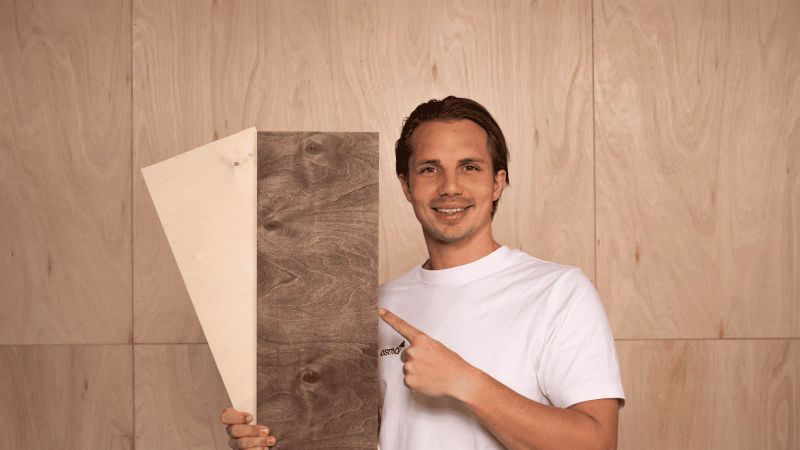
Before applying a product, it is important to first perform a test, for example using a sample. By performing a test, you can check in advance what the surface will look like and verify whether the finish adheres sufficiently to the wood. If you do not do this, you run the risk of having to treat the entire surface again later because you are not satisfied with the final result.
When testing, ensure that you use the same application method as you intend to use to treat the entire surface eventually. This ensures a reliable test that is representative of the final result.
2. Incorrect preparation
Everything starts with good preparation. That may sound cliché, but the end result depends heavily on the preparation. For example, ensure that you sand with the correct grit. For the final sanding pass, choose a grit that is neither too coarse nor too fine. A grit that is too coarse can leave scratches on the surface that remain visible after treatment. A grit that is too fine can cause the wood fibers to become too sealed, preventing the treatment from penetrating the wood. For sanding wood, we recommend the grit sequence 40-80-120. This ensures a bare and smooth surface to which a treatment can adhere well.
Also, make sure to sand in the direction of the planks and order enough product. It would be annoying if you discovered during the treatment that you do not have enough.
3. Do not mix product before use
Before applying the treatment, it is important to shake or stir the product well. Shaking or stirring ensures that the ingredients and any pigments in the product are evenly distributed. Failure to do so could result in an uneven appearance.
4. Using the wrong tools
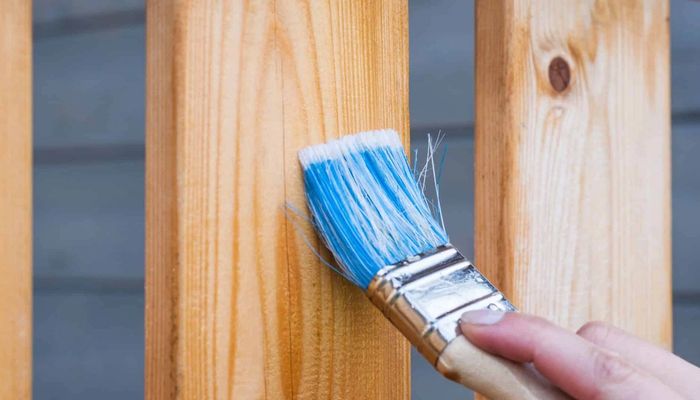
When treating the wood, it is important to use the right tools. The choice of tool affects the final appearance. For example, are you applying a wash effect? Then it is important to use a pad or a polishing machine. Polishing the product into the wood creates a wash effect. Do you prefer an opaque or even coloring? Or are you applying a colorless layer? Then it is better to work with a roller or brush. It is best not to use a lacquer or foam roller for this. These rollers absorb a lot of product, meaning you work sparingly and it is difficult to apply thin layers. As a result, you run the risk of detachment or an uneven appearance.
Applying too much or too little product
When treating wood, it is essential to apply the correct amount of product. If you apply too much, you run the risk of detachment. The wood will not have been able to absorb everything, causing product to remain on the surface. If you apply too little product, the wood may not be sufficiently protected against moisture, dirt, and damage in the future. Therefore, ensure you work in thin layers. You can always apply more product, whereas removing it is much more difficult.
Not applied or polished properly
Are you working with a roller? Then make sure to roll over the surface thoroughly. This means rolling over the surface again with light pressure. If you do not do this, the roller marks may remain visible on the wood after drying. By rolling over the entire length of the surface, you will distribute the product that has accumulated at the base of the roller across the surface, causing the mark to disappear. The same advice applies when using a brush.
Are you working with a pad or polishing cloth? Then make sure to buff thoroughly after applying the product. This ensures that the product is distributed evenly over the surface and that any excess product is removed. After buffing, the surface will feel almost dry.
Starting the second layer too soon
Before applying the second coat, the first coat treatment must be completely dry. If you apply a second coat too soon, several things can go wrong. For instance, the pigment from the first coat may not have penetrated the wood sufficiently. The second coat can then cause the remaining pigment to dissolve, resulting in an uneven appearance.
A so-called "tompouce effect" can also occur. In this case, the first layer remains soft and cannot dry through properly, or only with difficulty, due to the application of the second coat. The first layer will no longer be able to harden and will remain soft, like the cream layer of a tompouce. Therefore, ensure that the first coat is completely dry before applying the second. To achieve this, it is advisable to ventilate the room well, maintain an optimal temperature of around 20 degrees, and adhere to the drying time indicated on the packaging.
Need help with your DIY project?
Are you looking for a tutorial or do you have a technical question?
DIY help needed?
find a step-by-step guide for your project in our tutorial overview