Treating oak wood
Oak wood discolors and develops black spots due to tannic acid, but with Osmo treatments, yellowing is inhibited and the wood is protected from the inside and out against moisture and dirt. You can choose a white wash, a natural look without color variation, or a dark shade, always finished with a colorless topcoat for long-lasting protection and easy maintenance.
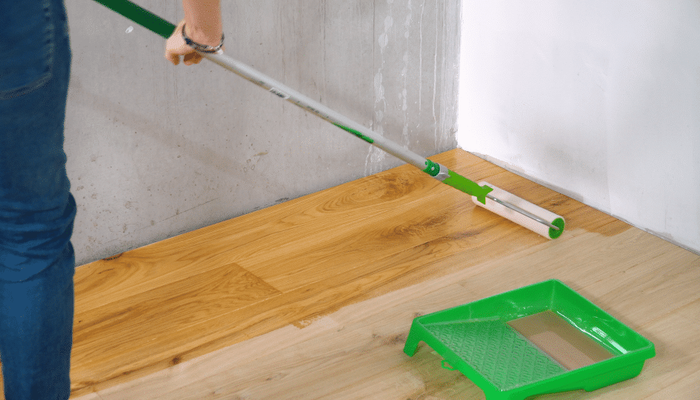
Products in this knowledge item;
Why treat and protect oak wood?
Protect your oak wood against moisture, dirt, and damage. Oak is an enormously popular type of wood. It is a durable wood that can be used for various applications. The biggest advantage of oak is that it is a strong wood that is easy to work with. Although oak naturally has a beautiful appearance, we do not recommend leaving the wood untreated. Are you going to treat an oak table or oil an oak floor? Then read this article.
Treating oak wood against yellowing and black spots
Because oak wood naturally contains a lot of tannic acid (tannin), the wood will turn yellow over time. Because Osmo products consist of an optimal combination of oil and wax, the yellowing of the wood is effectively inhibited. When you apply an Osmo treatment with color pigments, the wood will be protected against discoloration and UV radiation for years.
In addition to the fact that oak wood can turn yellow, it is also important that the wood is protected against tannin stains. When a type of wood containing tannic acid comes into contact with corrosive substances such as ammonia, water, or hand grease, for example, it can start to show black discoloration. To prevent this, it is best to treat it with hardwax oil. The oil penetrates the wood and the wax penetrates the top layer of the wood, so that it protects the wood from the inside out.
We would like to give you some handy tips for treating oak wood, so that you can enjoy it for as long as possible.
The best treatment for oak wood
To protect the oak wood against moisture, dirt, or discoloration, we recommend treating the wood. You can treat oak wood in a number of different ways:
- Colorless treatment: You can choose to preserve the natural appearance by, for example, oiling or using Osmo (hardwax oil). When these products do not contain color pigment, this is referred to as a ‘colorless’ or ‘transparent’ oil, but this does not mean that the wood itself will not discolor. A colorless treatment deepens the color of the wood itself and creates a ‘wet look’. Oak wood naturally has the characteristic of yellowing over time. Do you want to prevent yellowing or at least make it less noticeable? Then choose a wash effect or treat the oak wood with colored paint or Hardwax oil.
- Wash effect: By applying Osmo Oil Stain or Osmo Decor Wax Transparent by polishing (with a sponge or cloth) and removing excess product with a (clean) cloth, you will see that the color penetrates primarily into the rough parts of the wood, such as the grain or knots. We call this a wash effect. The most popular wash effects on an oak table or floor are white wash or grey wash effects.
- Painting: If you want an immediate opaque coloring on your oak wood, it is best to choose paint or Osmo Decor Wax Creativ. Paint gives the surface an opaque, even look. When you treat the wood with Osmo Decor Wax, you will always be able to see the natural wood structure.
- Treating oak wood without color difference: In that case, choose an untreated look. With Osmo, you can create a light oak look by applying Hardwax-Oil Effect (3041) or Topoil Natural (3068) and then finishing with a colorless layer (Hardwax-Oil Original or TopOil). Our ‘Natural’ products, such as Hardwax-Oil Effect and TopOil ‘Natural’, contain a very small amount of white pigment, mimicking the color of untreated oak. By subsequently applying a colorless layer over this, you deepen the wood color with the white pigment, making it appear as if the wood remains light.
- You can also make the oak darker without painting or staining it. For example, we offer Osmo Hardwax-Oil Farbig or Osmo Decorwax Transparent. This allows you to make the wood dark brown, for instance. For oak tables and kitchen countertops, we recommend using TopOil.
Popular treatments for oak wood
- White wash
Popular look that appears tough and robust - Treat oak wood without color variation
Preserve the natural color of the wood - Darken
Add warmth to your interior
1. Oak white wash oil
A very well-known trend: whitewash is a very popular look. With a whitewash oil, you apply a subtle white color to the wood. Because the color of the product does not completely cover the wood but remains transparent, a wash effect gives the wood a subtle look. The secret of the wash effect lies not in the oil, but rather in the application method. By rubbing the product into the wood, only light coverage is created. In the photo, Osmo Oil Stain ‘White’ (3501) has been applied.
Besides white, other wash effects are also possible. For instance, you can also create a black or grey wash on the wood. Grey wash also makes the wood lighter, but not as pale as whitewash. Blackwash creates an industrial look that looks great with black steel doors and dark cabinets.
Handy tip: Applying a whitewash effect ensures that only a small amount of product is applied. To optimally protect the oak wood, we always recommend rolling 1 to 2 coats of Hardwax-Olie Farbig (3040) or TopOil ‘white’ over it with a microfiber roller. You can then maintain it with our Liquid Maintenance Wax ‘White’ or Maintenance Oil ‘White’.
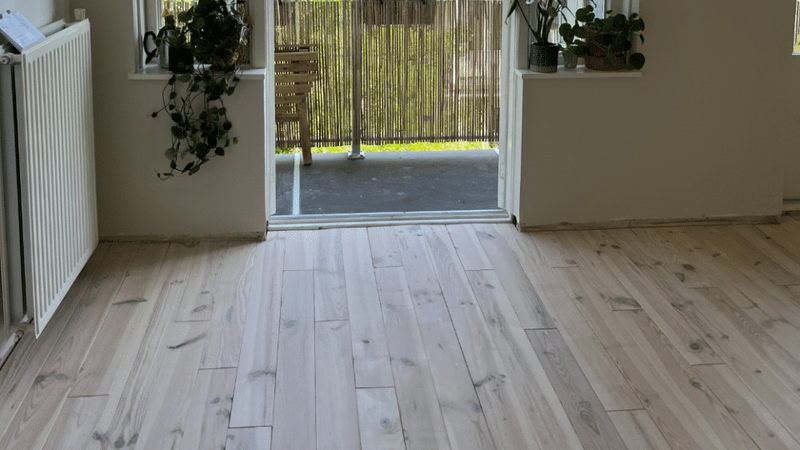
White wash vloer
De Osmo white wash olie is de Osmo Hardwaxolie Farbig 'Wit' (3040)
2. Treating oak wood without color difference
Untreated oak wood is naturally quite light-colored. If you want the oak of your floor, stairs, or furniture to retain its natural light color, you will likely be looking for a treatment that does not alter the color. For an untreated look of oak wood, we recommend our treatment with a small proportion of white pigment. Examples include Osmo TopOil 3068 Natural or Osmo Hardwax-Olie 3041 Effect Natural. Because these treatments contain a small proportion of white pigments, they ensure that the light color of the oak is preserved. By applying a colorless layer over the TopOil Natural or Hardwax-Olie Effect, you will see that the oak appears less white and more naturally ‘light-colored’.
Handy tip: By finishing with a colorless coating, you have an easy-to-maintain surface and optimal protection. A colorless topcoat is easier to touch up in the future than a treatment with color. Therefore, ensure that you finish the surface with one coat of Osmo Hardwax-Olie Original. For an optimally protected surface, we recommend applying the top coat with a roller or brush. This way, you can enjoy your oak wood worry-free for years to come.
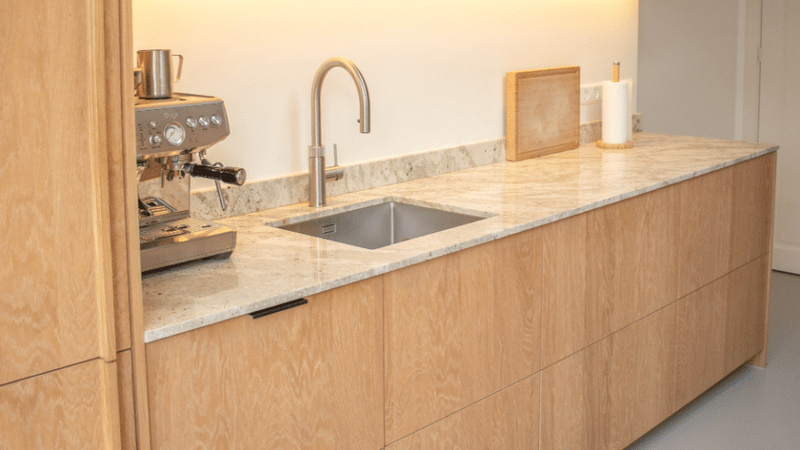
Geoliede Eiken keukenfrontjes
Eikenhout geolied zonder kleurverschil met TopOil 3068 Natural
3. Darken oak wood with oil
Would you prefer a dark look for your oak wood? Dark wood adds a lot of warmth to the interior. To darken your oak floor or table with oil, we recommend treating it with a Hardwax Oil Farbig such as the ‘Terra’ (pictured). Would you like to give the table a subtle dark tint? Then choose Osmo TopOil in one of our dark shades. When applied with a brush or roller, these will give the wood a subtle dark appearance.
Would you prefer an opaque dark color? Then go for Osmo Oil Stain in the colors Graphite, Tobacco, or Black. By applying these products with a brush or roller, you ensure an opaque dark color.
Handy tip: We also recommend finishing a dark wooden table or floor with a colorless topcoat. Dark color layers are difficult to touch up locally. By finishing the surface with a colorless topcoat, you ensure easy maintenance in the future. For dark surfaces, we often do not recommend matte finishes, as they can become dull.
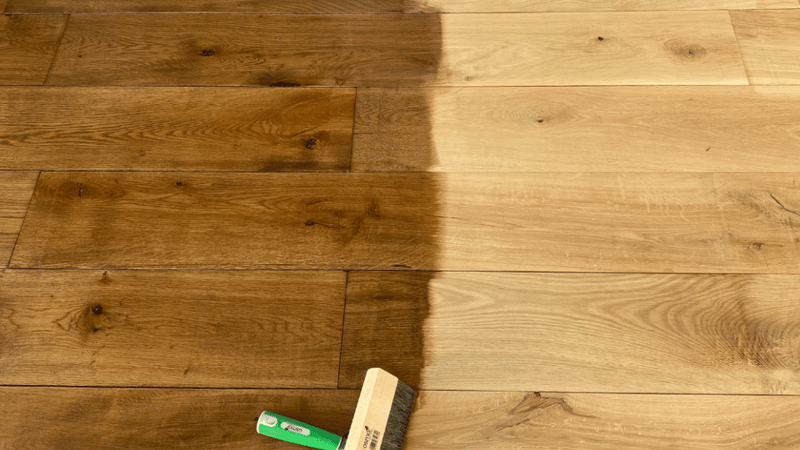
Maak je houten vloer donkerder
Deze vloer wordt donkerder gemaakt met de Osmo Hardwax-Farbig 'Terra' 3073
Supplies
Need help with your DIY project?
Are you looking for a tutorial or do you have a technical question?
DIY help needed?
find a step-by-step guide for your project in our tutorial overview