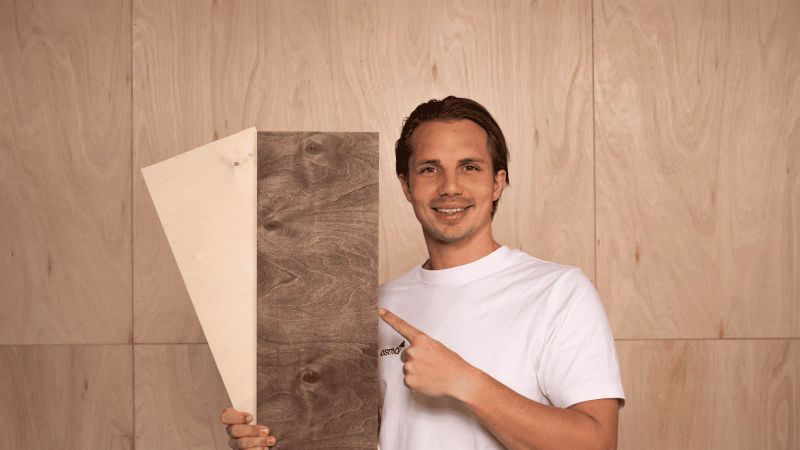
Removing paint from wood without sanding
Removing paint by sanding is time-consuming and can damage the wood. With Osmo Paint Stripper, you can loosen old paint layers without sanding, so the wood remains intact and is immediately ready for a new finish.
Products in this knowledge item;
Can you remove paint from wood without sanding?
Removing paint from wood can be a tricky job. Sanding is often the standard method, but it takes a lot of time. What if there was a way to remove paint from wood without sanding? In this article, we reveal how you can remove paint from wood without having to sand.
Benefits of removing paint without sanding
There can be several reasons why you might want to spare wood from a coat of paint. For instance, you might want to restore the natural appearance of the wood, or you might want to apply a new coat of paint. Whatever the reason, it can be done much more easily and quickly than by sanding. Sanding is a difficult and time-consuming job that requires special tools. Not everyone has those at home. Moreover, if not done properly, sanding can damage the wood. This can lead to irregularities in the wood or even permanent damage. By removing paint without sanding, you preserve the original structure and texture of the wood.
Removing paint from wood without sanding – step-by-step instructions
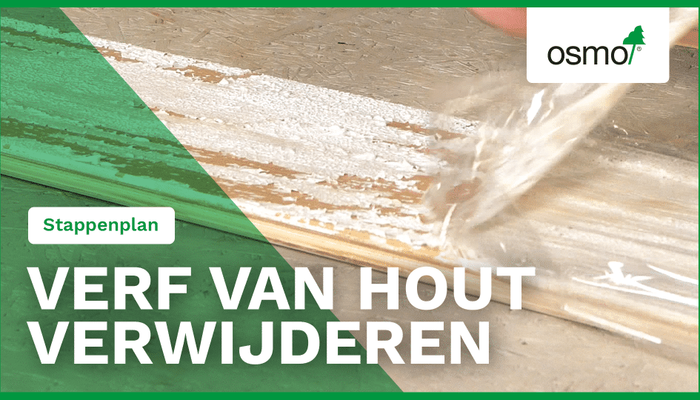
Removing paint from wood without sanding – step-by-step instructions
Ready to get started? We are happy to help you on your way with a step-by-step plan.
- Stir the paint stripper well with the stirring stick for about a minute. The paint stripper should not be diluted.
- Apply the paint stripper to the old paint layer. Use a brush for this. Apply a generous and even layer. Sufficient product must be applied to achieve a good result.
- Cover the surface with plastic sheeting and let it soak in. The soaking time depends on the layer you want to strip. Sometimes a few minutes of soaking is sufficient, but it may also be necessary to let the stripper soak in for hours or even a whole night. Keep a close eye on the surface and test occasionally with a trowel or paint scraper to see if the layer is starting to come loose.
- Remove the paint layer at the optimal moment. Do not let the stripper soak in longer than necessary.
- Scrape away the layer of dissolved paint with a trowel or paint scraper.
- If not all paint can be scraped off, the process must be repeated.
- Once all paint has been removed, rinse the wood with water.
Supplies to remove your paint without sanding.
Tips before you can start
- Preparation of wood
Before you begin, it is a good idea to tape off or cover any areas that should not get paint stripper on them. For example, lay a tarp on the outdoor tiles or tape off the walls.
2. Tip to never have to sand again
It sounds too good to be true, but it really is possible! By finishing your wood with Osmo, you will never have to sand it again. To ensure that you never have to sand your exterior wood again, you will need to apply an Osmo exterior finish. Because this product penetrates and adheres to the wood, it will not crack or peel. When you want to touch up an Osmo protective layer, cleaning is sufficient preparation. After that, you can easily apply a new layer of protection, without sanding!
Choose the right paint stripper
When using a paint remover, your choice of paint remover is very important. First, the product determines how effectively the paint is removed. Not every paint stripper is suitable for all paint types or wood types. A poor choice can lead to incomplete removal or even damage to the wood. Additionally, your choice also affects your health. Some products contain harsh chemicals that can be harmful to your health if inhaled or if they come into contact with the skin.
The Osmo paint stripper stands out because of its formula, which is both effective and environmentally friendly. Made from natural ingredients, it is gentle on wood and tough on paint, without harmful fumes or side effects. The Osmo paint stripper not only ensures a clean removal of old paint layers but also protects and preserves the natural quality of the wood, preparing it for a new finish or treatment.
Need help with your DIY project?
Are you looking for a tutorial or do you have a technical question?
DIY help needed?
find a step-by-step guide for your project in our tutorial overview