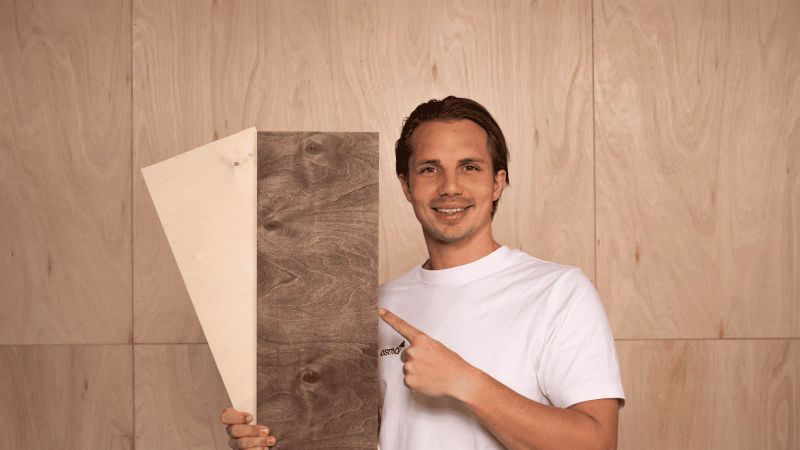
Spot repair with Osmo
Stubborn stains or damage can make treated wood vulnerable and less attractive. By protecting it with Osmo Hardwax-Oil Original, you can perform spot repairs on the boards while maintaining both protection and appearance.
Products in this knowledge item;
Spot maintenance can be done with Osmo Hardwax-Oil
Do you have a wooden floor, piece of furniture, or other surface treated with Osmo, and has something spilled or leaked that won’t come off? Don’t worry! With Osmo products, you can perform spot repairs. This is one of the key strengths of Osmo products.
Partial renovation with Hardwax-Oil
To repair larger damages, individual boards can be re-treated with Osmo Hardwax-Oil Original. The boards must first be sanded. To achieve the best results, follow these eight steps:
- Isolate the damaged area – Separate the damaged section from the rest of the surface using painter’s tape.
- Sand the surface evenly – Match the sandpaper grit to the last sanding of the surrounding boards. Start with grit 120 and check if the damage or stains are removed. If not, use coarser sandpaper.
- Remove dust thoroughly – Clean the sanded area before treatment using a vacuum or a dust cloth.
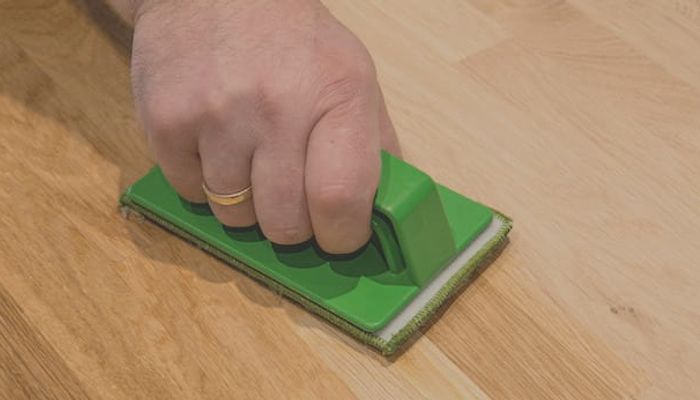
- Apply the first layer – Use an Osmo Microfiber Roller to apply a thin layer of the same product as the last treatment, e.g., Hardwax-Oil 3065 Semi-Matt. If the area was only sanded with grit 120, it is recommended to apply with a lint-free cotton cloth to use less product. Dry this layer by buffing with another dry lint-free cloth.
- Drying – Let the treated area dry for 8–10 hours.
- Apply a second thin layer – Use a lint-free cotton cloth and buff dry with another dry lint-free cloth.
- Drying – Allow this second layer to dry for 8–10 hours.
- Color adjustment – Sanding may lighten the natural wood color of the repaired area compared to the surrounding wood. The color will gradually even out over time.
Supplies
Need help with your DIY project?
Are you looking for a tutorial or do you have a technical question?
DIY help needed?
find a step-by-step guide for your project in our tutorial overview