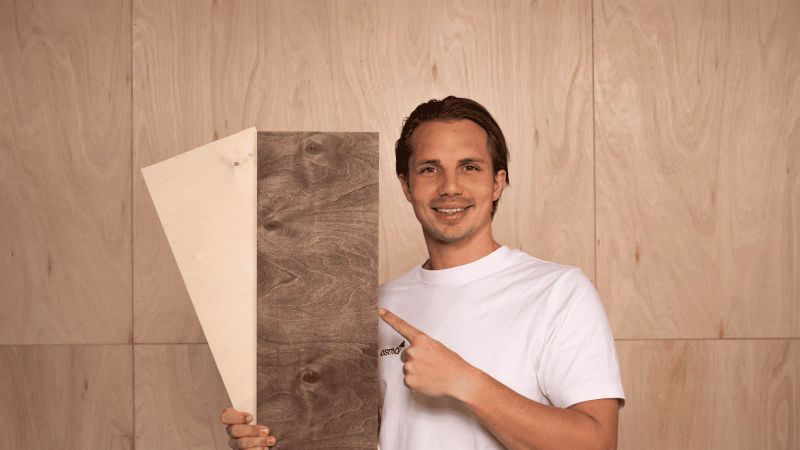
Stain a table
A table can discolour and wear due to moisture and dirt when a standard stain starts to crack or peel over time. By using Oil Stain and a colourless TopOil from Osmo, the wood is protected from within, ensuring the table remains beautiful and easy to maintain for a long time.
Products in this knowledge item;
Video: how do I stain my table?
Table Staining
Staining a table goes far beyond just a modern, robust look. Stain also protects wood against moisture, dirt, and damage. In this article, we explain everything about staining a table and provide a step-by-step guide for a sleek end result.
Why stain your table?
Whether your table is ready for a new look or a new protective layer, staining is always a good idea. Besides providing a stylish appearance, staining simultaneously offers the table optimal protection against moisture, dirt, and wear. Staining a table isn't difficult, but for a sleek look, there are a few things you need to pay attention to. Don't worry, we'll explain it to you step by step. That way, you'll be able to do it all yourself!
Choose the right stain
You probably paint your table primarily to change its appearance. But wouldn't it be useful if the table were also immediately better protected? The choice of paint is more important here than you might think. Regular stains, based on water for example, create a colored layer on the wood. This provides some protection, but over time, this layer can start to flake or crack. For your beloved table, you might prefer a slightly more wear-resistant solution. You should opt for Osmo Oil Stain instead. This is a finish that, just like regular stain, provides a robust look but penetrates the wood and adheres firmly there. It protects the wood from the inside out against moisture, dirt, and damage, preventing the color layer from cracking or peeling. As a result, the grain and structure of the wood remain visible, and your table will last much longer! Osmo Oil Stain creates an elastic protective layer that is resistant to the shrinking and swelling of the wood. Apply a colorless TopOil as a top layer, so you can easily maintain the table in the future without color differences occurring.
Preparing the table
Before you start working with the stain, the table may need to be prepared first. The table must be thoroughly clean and bare. Is the table new? In that case, you can usually get started immediately. Is there still an old layer of paint, varnish, or stain on the table? Then this will first need to be removed by sanding. To make the table completely bare and even, we recommend sanding in three separate passes. This ensures that the new layer of stain adheres well. First sand with 40 grit, then with 80 grit, and finish with 120 grit sandpaper. Do not forget to take safety precautions during this process, such as wearing a dust mask, safety glasses, and gloves. Make sure to thoroughly remove dust from the table after sanding using the Osmo Easy Pads.
Is the table untreated but very dirty? Then clean the table with Intensive Cleaner to remove deeply ingrained dirt.
Everything you need
Table Staining – step-by-step instructions
Ready to start staining? We are happy to help you on your way with a step-by-step plan!
- First, perform a test on the wood. This ensures that the product adheres sufficiently to the wood and that the appearance meets your expectations.
- Stir the can of Oil Stain thoroughly for about a minute. This ensures that the ingredients and pigments in the product are well distributed.
- Apply a thin polishing coat of stain to the wood. Use the white pad on the hand pad holder for this. Work as much as possible along the direction of the wood grain.
- Buff out the product. Use the fleece pad on the hand pad holder for this. Work as much as possible along the direction of the wood grain.
- Let the table dry for at least 24 hours. Ensure good ventilation and a temperature of approximately 20 degrees.
- Apply a thin layer of colorless TopOil using a roller on a roller holder. Work as much as possible along the entire length of the surface and along the direction of the wood grain.
- Roll the surface thoroughly with an almost dry roller, under light pressure. Ensure that the product is evenly distributed over the surface and that any roller marks disappear.
- Allow the table to dry for at least 10 to 12 hours. Ensure good ventilation and a temperature of approximately 20 degrees during this time.
- Apply a second thin layer of colorless TopOil (see points 6 through 8).
Maintain table
To keep your table looking beautiful for as long as possible, we recommend cleaning it daily and maintaining it regularly. Regular maintenance can prevent serious damage. For daily cleaning, you can use a standard cleaning spray and a dishcloth. However, this can cause the coating to dry out and slowly break down. Do you want to prevent this? Then I recommend using the Osmo Spray Cleaner. This cleaning spray contains a small amount of wax, which nourishes the table's coating and ensures it lasts longer.
Need help with your DIY project?
Are you looking for a tutorial or do you have a technical question?
DIY help needed?
find a step-by-step guide for your project in our tutorial overview