Cleaning hardwood: how to do it safely and effectively
Cleaning hardwood requires the right approach to prevent damage and graying. Discover how to effectively clean hardwood and preserve its natural character, both indoors and outdoors.
What you need for this tutorial;
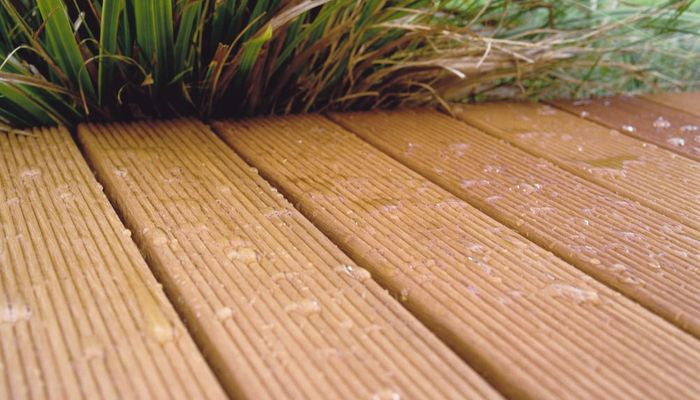
Hardwood is a durable type of wood that is widely used for decking, patios, and other outdoor applications. However, just like other types of wood, it takes quite a beating outdoors. Think of green deposits, dirt from leaves, or graying due to UV radiation. Regularly and properly cleaning your hardwood is therefore essential to preserve the wood's color and extend its lifespan.
In this text, you will read exactly how to clean a wooden deck, which products you should avoid, and how to treat your wooden patio afterwards.
Why is cleaning hardwood important?
A hardwood deck is often exposed to the open air, giving rain, dirt, moss, and algae free rein. This can make the wood slippery, discolor it, and eventually damage it. By cleaning it regularly:
- You prevent slipping caused by green deposits
- You extend the lifespan of your patio or deck
- You preserve the beautiful, natural appearance of the wood
Please note: cleaning wood is not the same as simply spraying it down with a high-pressure washer. This can damage the wood grain and make the surface rough. We therefore advise against this.
Cleaning with vinegar or green soap?
It seems like a logical choice: cleaning with green soap or cleaning vinegar. However, we strongly advise against this. Both products can do more harm than good:
- Green soap leaves behind a greasy film that actually attracts dirt.
- Cleaning with vinegar dries out the wood and can damage plants around your deck.
- The combination of water and vinegar accelerates the graying process.
Instead, use products specifically developed for cleaning wooden patios and decks.
Which product do you actually use?
For the best results, choose one of these cleaners:
For regular cleaning of dirt, algae, and green deposits on your wooden patio or decking.
For intensive cleaning of heavily soiled or greyed wood. Restores the color of the wood.
Both products are safe for your patio *and* your plants. And they do not damage the wood. This way, you clean the surface in an environmentally friendly manner.
Step-by-step plan: Cleaning a hardwood deck
Choose the right product
- Use Patio Cleaner for light soiling or slipperiness.
- Use Power-Gel for heavy graying or ingrained dirt to restore the original color.
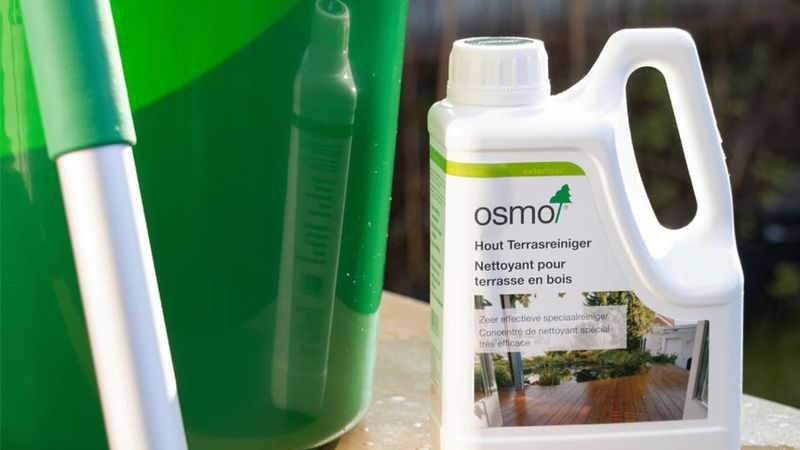
Apply the product
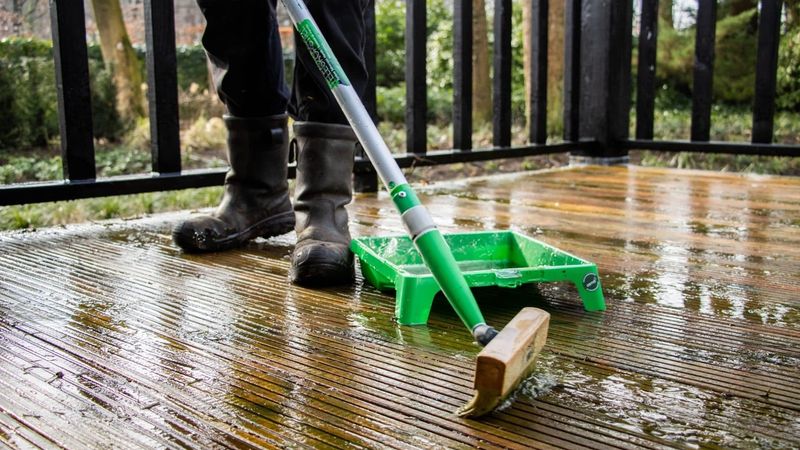
- Use a hard patio brush with a telescopic handle.
- Always work in the direction of the wood grain.
- Allow the Power-Gel to soak in for approximately 20 minutes.
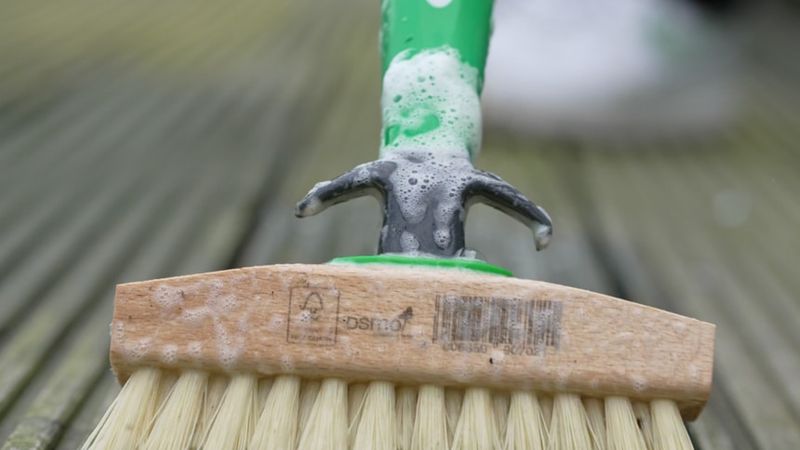
Scrub and rinse
- Use the stiff broom or patio brush again to clean the dirt.
- Rinse with clean water. Do not use a high-pressure cleaner.
Let the surface dry thoroughly
Depending on the weather, this takes 24–48 hours. Afterward, you can treat the wood to prevent drying out and new soiling.
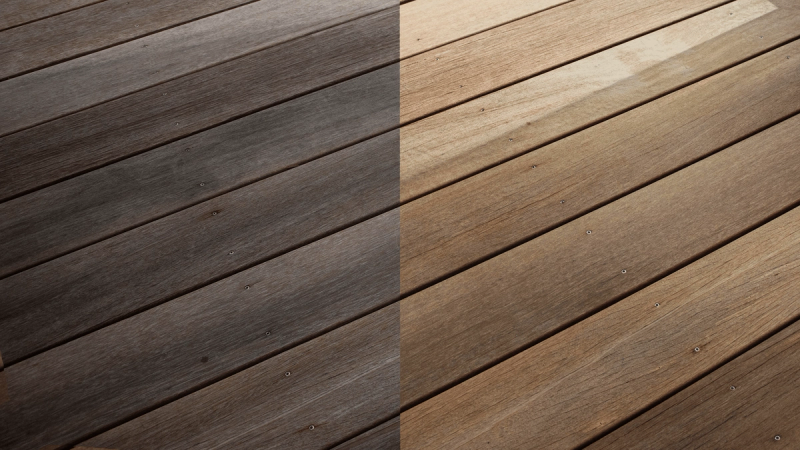
Follow-up treatment: Protect your hardwood after cleaning
To optimally protect wood types such as hardwood against moisture, dirt, and UV radiation, treat it with oil. This keeps your patio or decking clean and in top condition, even under severe weather conditions.
Use the following:
- Osmo Patio Oil – to keep horizontal wood parts such as decking boards clean.
- Osmo UV Protection Oil – for vertical parts such as fences or garden furniture.
These oils penetrate deep into the wood and offer long-lasting protection without the surface peeling.
Supplies
To clean hardwood, you need the following supplies:
Finally, you will also need a bucket of clean water.
Maintenance advice
- Clean at least twice a year, preferably in spring and autumn
- Remove leaves and dirt regularly
- Treat the wood with a special wood oil after cleaning
- Do not use a high-pressure washer or aggressive cleaning agents; hot water is not recommended
- Check annually whether a new layer of oil is needed
Frequently asked questions about cleaning hardwood
This tutorial belongs to
What you need for this tutorial;
Need help with your DIY project?
Are you looking for a tutorial or do you have a technical question?
DIY help needed?
find a step-by-step guide for your project in our tutorial overview