Cleaning hardwood with baking soda: Handy tips & Step-by-step plan
Soda is often mentioned as a solution for cleaning hardwood, but is that really wise? Read what to look out for and which approach is safe for keeping hardwood clean, strong, and beautiful.
What you need for this tutorial;
Hardwood is known for its strength, durability, and warm appearance. It is therefore a popular type of wood for decking, patios, and other outdoor applications. However, dirt, green deposits, and graying can severely affect its appearance. A common tip is to clean hardwood with baking soda, but is that actually a good idea?
In this article, you will read all about the pros and cons of using baking soda on wood, and discover why the Osmo Patio Cleaner is a much safer and more effective choice.
Cleaning hardwood with baking soda: pros and cons
Cleaning with soda or baking soda sounds appealing. It is inexpensive, readily available, and is often touted as a natural cleaning agent. However, there are significant disadvantages when used on hardwood surfaces such as decking or patios.
Possible benefits
- Soda is grease-dissolving and can clean gently
- Easily mixable with warm water
- Biodegradable (in pure form)
Disadvantages of cleaning hardwood with soda
- High acidity or alkaline effect: soda can extract natural oils from the wood, causing it to dry out
- Discoloration: prolonged use can affect the color of the wood
- Damaging wood: with incorrect use or in high concentrations, soda can damage the wood fibers
- Not suitable for long-term protection: soda offers no protection against UV radiation, moisture, or new soiling
- Harmful to plants: rinsing off soda can damage your plants or the grass around your patio
Conclusion: although soda sounds like an environmentally friendly alternative, its effect on hardwood is often negative rather than positive. Fortunately, there is a better alternative.
A better alternative: Osmo Patio Cleaner
Do you want to clean your wooden decking or wooden patio without the risk of damage? Then Osmo Patio Cleaner is the best choice. It has been specially developed for wooden surfaces such as bankirai, azobé, and other wood types.
Why choose Osmo Patio Cleaner?
- Gentle on wood, powerful against stubborn dirt
- Removes green deposits, algae, and dirt
- Safe for plants and animals
- Does not affect the natural color of the wood
Step-by-step plan: cleaning hardwood with the Osmo Patio Cleaner
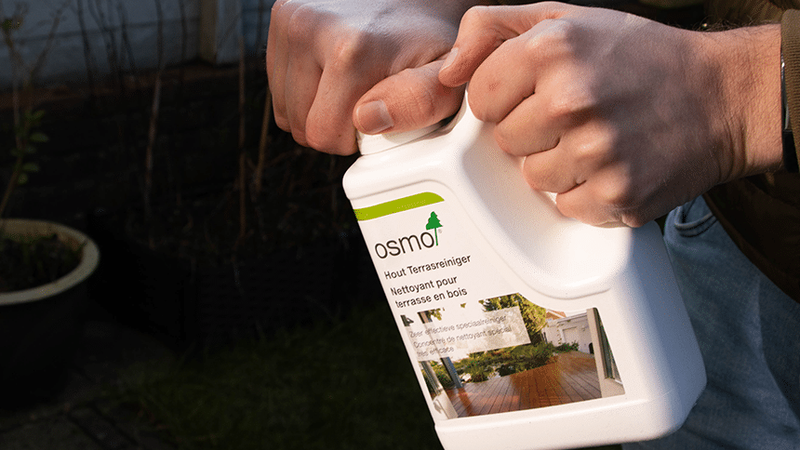
Choose the right product
- Light soiling or slipperiness: use Osmo Patio Cleaner
- Grayed or heavily soiled wood: use Osmo Power-Gel
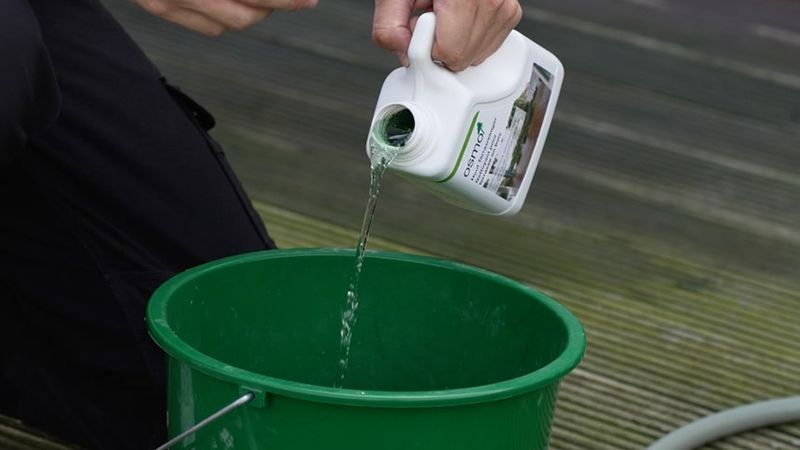
Apply the product
- Use a hard patio brush with a telescopic handle
- Work in the direction of the wood grain
- Let the cleaner soak in for ±10–20 minutes
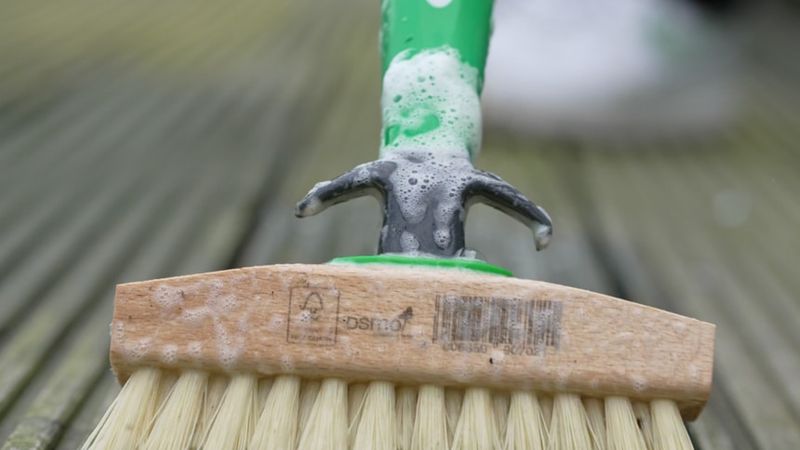
Scrub and rinse
- Use a brush again to loosen the dirt
- Rinse with clean water
- Avoid a pressure washer (which can damage the wood)
Let the wood dry thoroughly
Allow the surface to dry for at least 24 hours before applying any oil treatment.
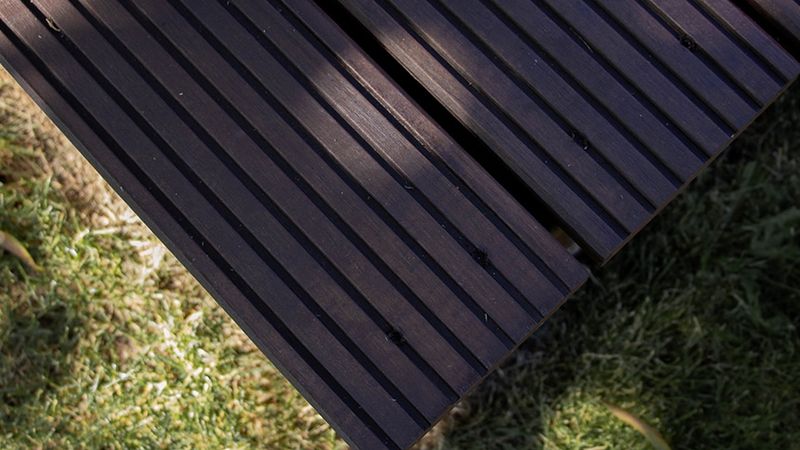
Cleaning and protecting your patio: this is what you need
Finally, you also need a bucket of water.
Treatment after cleaning
After cleaning, it is important to treat the hardwood against moisture, dirt, and UV radiation. This prevents graying and extends the lifespan.
- Horizontal wood parts: Osmo Terrace Oil
- Vertical wood parts: Osmo UV Protection Oil
Both oils are specially developed for outdoor use, penetrate deep into the wood, and do not flake off. You can choose the colorless variant or a color such as ‘bankirai’ for a warm look.
Frequently asked questions about cleaning hardwood with soda
This tutorial belongs to
What you need for this tutorial;
Need help with your DIY project?
Are you looking for a tutorial or do you have a technical question?
DIY help needed?
find a step-by-step guide for your project in our tutorial overview