Treating Douglas fir: do you choose oil or stain?
Undecided between oil or stain for Douglas fir? Read about the differences and make the right choice for your project.
What you need for this tutorial;
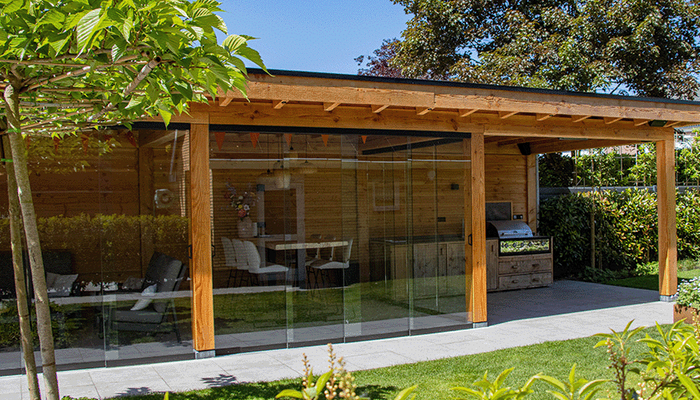
Douglas fir is a popular wood type for outdoor use due to its warm color, durability, and robust appearance. However, untreated, it remains vulnerable to graying, dirt, moisture, and UV radiation. By treating your Douglas fir with oil or stain, you ensure long-lasting protection and preserve the natural beauty of the wood.
In this article, we explain what best suits your needs: treating Douglas fir with oil or stain, what look you can create, and how best to prepare your wood.
When do you choose oil and when stain for Douglas fir?
When treating Douglas fir, the choice between oil and stain depends mainly on the look you desire. For protection, however, it makes no difference: both products provide excellent protection against weathering, UV radiation, and moisture.
- Stain: gives a slightly richer color and accentuates the wood grain. Perfect if you want a slightly more intense look but still wish to preserve the character of the wood.
- Oil: ensures a more even coloring, while preserving the structure of the wood more. Ideal if you are looking for a natural, calm effect.
Whichever option you choose, the natural appearance of the Douglas fir remains visible with both variants.
Preparation when treating Douglas fir
Proper preparation is essential to achieve a beautiful and durable end result.
Sanding
Has your Douglas fir wood been previously treated with varnish, stain, or paint? Then you must sand it first. Use sandpaper with grit 40, then 80, and finally 120.
Do you have oiled wood? Then do a small test patch. Is the oil absorbed well? Then you can treat it immediately without sanding again.
Untreated Douglas fir wood
Is your Douglas fir wood still untreated? Then you can start treating it immediately, without extra preparation.
Grayed or soiled wood
Is your Douglas fir wood grayed or soiled? Then first de-gray the wood with Osmo Power-Gel wood de-grayer. This restores the original color of the wood and improves the absorption of oil or stain.
💡 Tip: Order a sample to test the desired look on a small piece of wood first.
Step-by-step plan: staining or oiling Douglas fir
Whether you choose oil or stain, the application broadly follows the same step-by-step plan.
Choose the right product
- Oils – Vertical wood parts: use Osmo UV Protection Oil. Protects against UV radiation and prevents graying.
- Oils – Horizontal wood parts: use Osmo Terrace Oil. Specially developed to combat moisture, dirt, and mold on terraces.
- Stains – Use Osmo Natural Oil Stain. Provides powerful protection and subtly colors the wood.
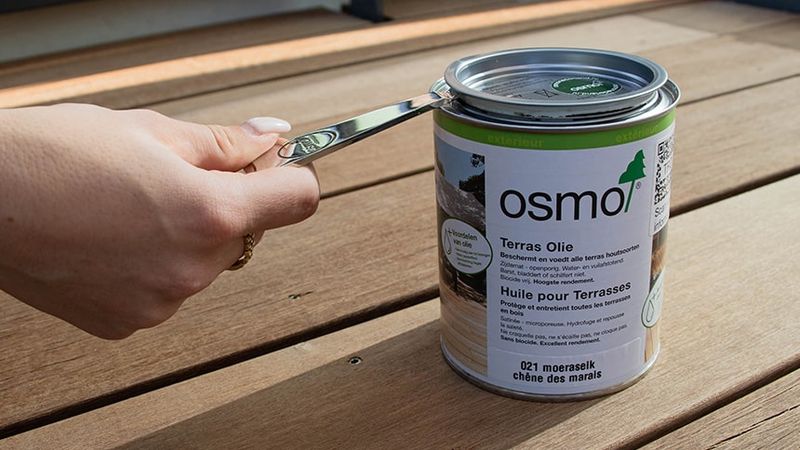
Apply the first layer of oil
Use a block brush to apply the oil or stain thinly and evenly, always in the direction of the wood grain.
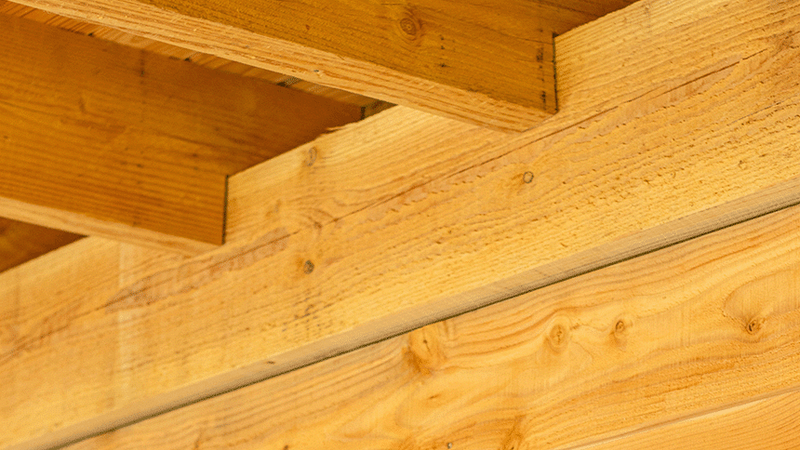
Let dry
Allow the surface to dry for 8 to 12 hours in good ventilation. Protect the wood from rain or dirt during this period.
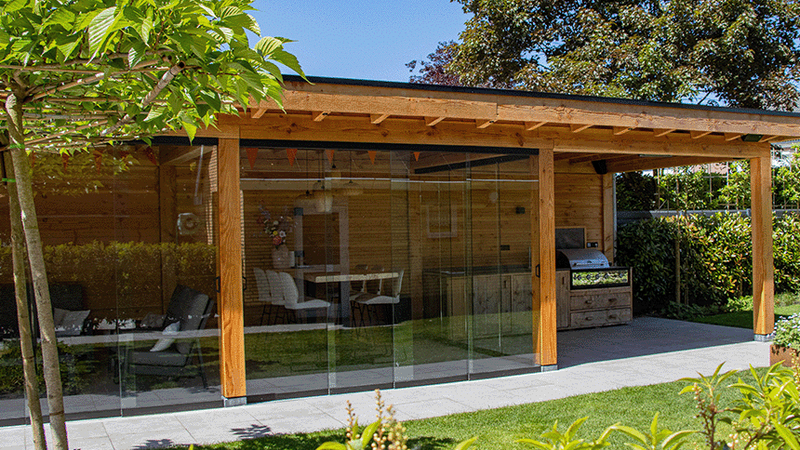
Apply a second coat
For optimal protection, apply a second layer in the same way. This layer must also dry completely.
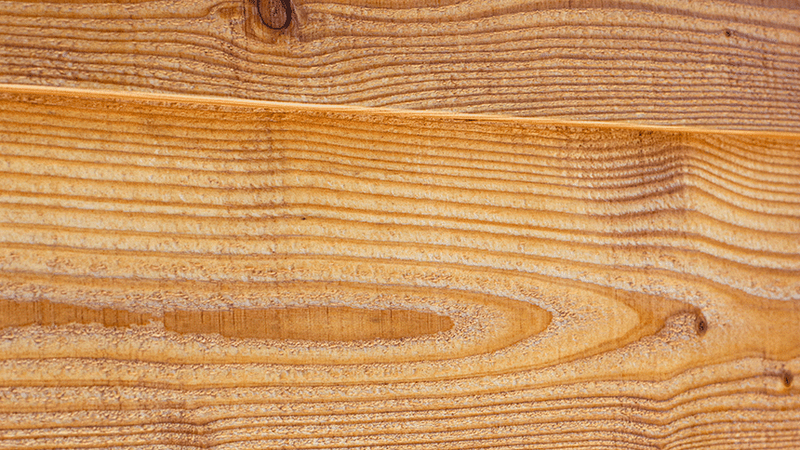
Benefits of Osmo for Douglas fir
- Offers excellent protection against weather influences such as rain, sun, and snow.
- Prevents graying thanks to powerful UV-blocking components.
- Keeps the wood grain visible for a natural look.
- Moisture-regulating: prevents blistering or cracking.
- With Osmo, sanding is not necessary during maintenance: easy to reapply.
Tips for a perfect result
- Clean the surface thoroughly with a soft brush before you begin.
- Apply thin coats for a beautiful and even finish.
- Allow the wood to dry for at least 24 hours after treatment before it comes into contact with moisture again.
Supplies
To treat a mango table, you need the following:
And finally, you also need sandpaper (grit 40/80/120).
Color examples
Osmo oil creates a protective layer without losing the wood structure. This way, you preserve the natural beauty of your mango wood table.
TopOil: Popular colors
Mango wood maintenance: how to keep the table beautiful
With proper maintenance, your table remains beautiful for longer and protected against the passage of time:
Clean daily: use a dry cloth or Osmo Spray Cleaner
For light wear: treat with Osmo Liquid Maintenance Wax
Need a new protective layer? First clean with Intensive Cleaner, then treat with Osmo Maintenance Oil
Note: do not use harsh cleaning agents or scouring pads. A soft cloth or microfiber cloth is best suited.
Frequently asked questions
This tutorial belongs to
What you need for this tutorial;
Need help with your DIY project?
Are you looking for a tutorial or do you have a technical question?
DIY help needed?
find a step-by-step guide for your project in our tutorial overview