Removing green algae with vinegar: pros, cons and alternatives
Vinegar is often mentioned as a solution for green algae, but is it a good idea? Read what vinegar does to wood and other surfaces.

What you need for this tutorial;
Removing green algae with vinegar is a popular search term, because many people think vinegar is a simple solution for green algae. Green algae often appear on patio tiles, wooden decking and other outdoor surfaces, especially in damp spots where algae and moss like to grow. In this article, we discuss the pros and cons of using cleaning vinegar or natural vinegar, and what a better and more environmentally friendly choice is for wood.
Pros and cons of vinegar
Pros
- Easy to get: cleaning vinegar and natural vinegar are available in almost every supermarket.
- Cheap: it is one of the cheapest cleaning agents you can use.
Cons
- Strong smell: vinegar has a pungent smell that lingers for a long time.
- Not environmentally friendly: the acid in vinegar (acetic acid) can harm plants and affect the pH of the soil, which is bad for the environment.
- Damages surfaces: vinegar can further damage wood, joints and tiles, among other things, especially with regular use.
- More expensive in the end: because of damage to tiles and plants, using vinegar can end up costing more than professional cleaning products.
A better alternative: Osmo Terrasreiniger
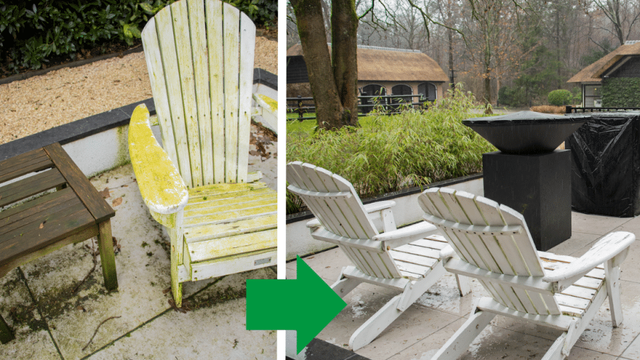
Osmo Terrasreiniger offers an environmentally conscious alternative for removing green algae from wooden surfaces. It is a professional cleaner that removes deep-seated deposits without harming the wood.
Benefits of Osmo Terrasreiniger
- Effective and gentle: removes algae, moss and green deposits from wood without damage.
- Thorough cleaning: gets your wooden terrace, decking or garden furniture clean again.
- High coverage: 1 liter cleans up to 100 m².
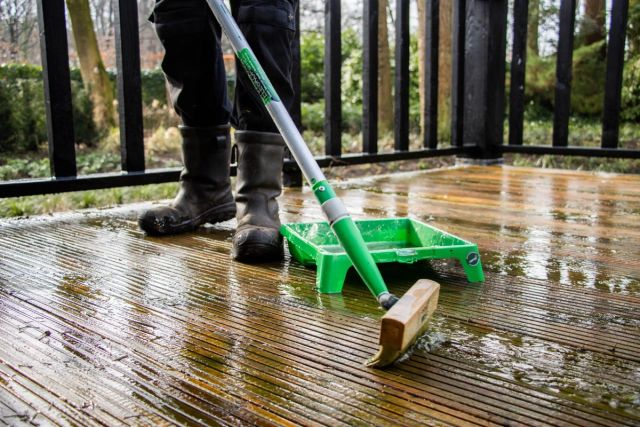
- Easy to use: apply it with an Osmo Terrace Brush, scrub and rinse the surface.
Videos: Removing green algae with vinegar
In these videos you will see how to remove green algae from wood and why vinegar is not good for wooden decking.

Groene aanslag verwijderen: hoe verwijder ik groene aanslag?

Waarom azijn niet goed is voor je houten terras
Step-by-step plan: removing green algae
Ready to remove your green algae? Here is a handy step-by-step plan so you can get started right away.
Prepare
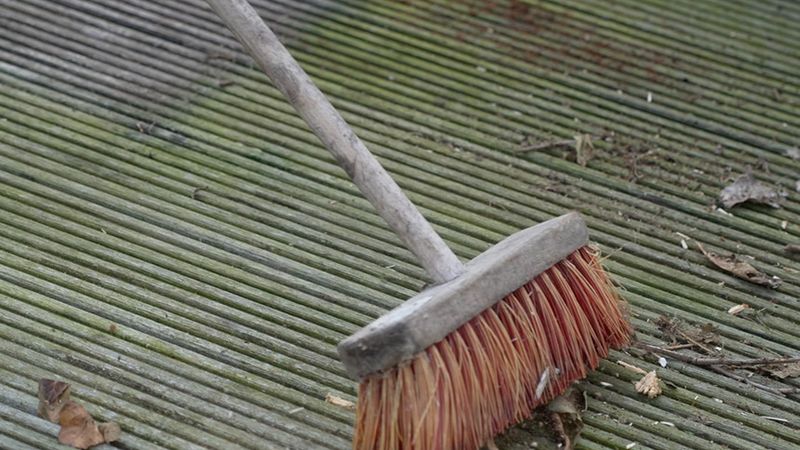
- Sweep the terrace clean with a stiff broom to remove dirt and sand.
- Check the drainage to prevent wet spots and keep weeds at bay.
Apply
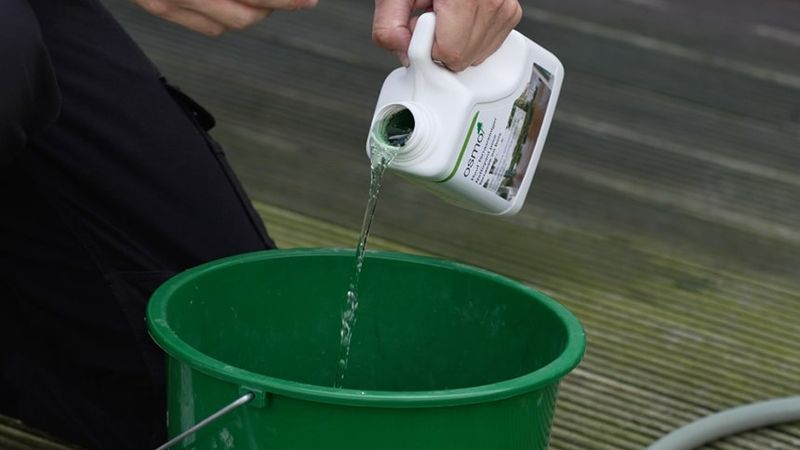
- Mix Osmo Terrasreiniger with clean water in a ratio of 1:25 for light soiling, or use it 1:1 for stubborn dirt.
- Pour the mixture evenly over the wooden surface and use the Osmo Terrace Brush to work the product in.
Let it work
Let the cleaner work for 10 to 15 minutes so that it loosens the affected spots, algae and moss.

Rinse
Rinse the surface thoroughly with water. Avoid using a pressure washer to protect the wood from damage.

Follow-up treatment
To give your terrace extra protection, apply a protective layer after cleaning. After using Osmo Terrasreiniger on wood, wait at least 24 hours before you start.
- Osmo Steen en Terracotta Olie: for patio tiles and stone surfaces.
- Osmo UV-Beschermingsolie: for vertical wooden surfaces.
- Osmo Terras-Olie: for horizontal wooden surfaces.
Supplies
Maintenance and preventing green algae
Regular maintenance prevents green algae from coming back:
- Clean twice a year: spring and fall are ideal times to remove green algae.
- Prevent wet spots: make sure there is good drainage and remove dirt and sand regularly.
- Make sure there is a good protective layer: use Osmo products to protect your wooden surface against all weather conditions.
Frequently asked questions
This tutorial belongs to
What you need for this tutorial;
We're happy to help
Looking for DIY advice or have a technical question?