Staining Douglas fir wood: tips and step-by-step plan for optimal protection
Staining Douglas fir wood protects it against wind and weather. Discover how to do it properly for a long-lasting result.

What you need for this tutorial;
Douglas fir is a popular wood for outdoor use thanks to its durability and attractive look. Still, it needs regular maintenance to protect it against the weather, moisture and gray discoloration. Using a suitable stain for Douglas fir is essential to extend its lifespan and preserve the natural wood color. In this article, you will read all about staining Douglas fir, which products you can use and how to approach it step by step.
Preparation before staining Douglas fir wood
Good preparation is important for optimal adhesion of the stain and long-lasting protection. Always check the condition of the wood and adjust your preparation accordingly.
- Sanding (for older coats of paint or stain)
Sand the Douglas fir with sandpaper in the grit sequence 40, 80 and finally 120. This creates an even surface and good adhesion for the new stain. Planed smooth wood may need extra sanding to open the pores. - Untreated Douglas fir
Untreated Douglas fir is ready to be treated right away, provided it is clean and dry. Untreated wood often absorbs the first coat of stain faster. - Grayed or soiled wood
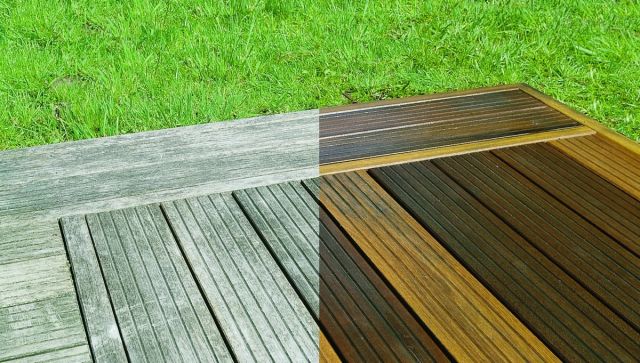
For grayed wood, use a wood degreyer to bring back the original color. This also helps remove dirt and allows the stain to penetrate the wood surface properly.
Videos: Staining Douglas fir
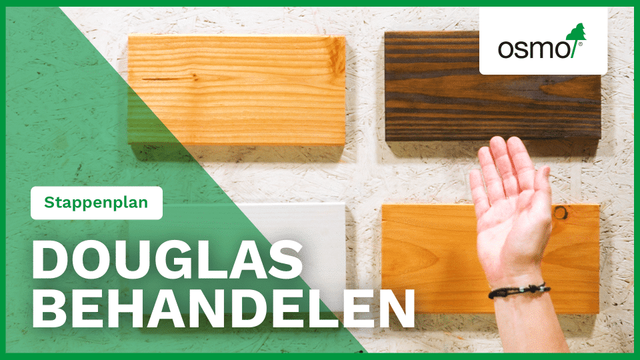
In these videos you will see how to treat Douglas fir and why you should stain Douglas fir.

Douglas hout behandelen

Waarom moet je Douglas hout beitsen?
Step-by-step plan: staining Douglas fir wood
Follow these steps to stain Douglas fir correctly and achieve the right protection.
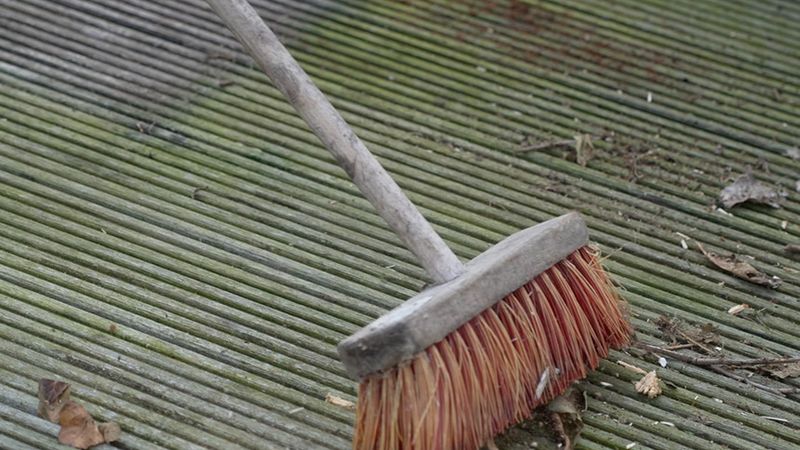
Clean the surface
Clean the wood thoroughly with a brush and a suitable wood cleaner such as Osmo Terrasreiniger. Make sure all dirt, dust and old residue has been removed. For a good result, it is important that the surface is completely dry before you start.
Choose the right stain for Douglas fir wood
Osmo offers several stain options that are highly suitable for Douglas fir:
Color option with pigment: Use Osmo Natuurlijke Olie-Beits to provide extra protection against UV rays. This product penetrates deep into the wood and preserves the natural wood structure.
Transparent finish for a natural look: Use Osmo UV-Beschermingsolie for vertical parts such as fences. This oil offers excellent protection against graying without changing the appearance of the wood.
Treatment for horizontal surfaces: For decking or patios, use Osmo Terras-Olie, which has been specially developed to keep out moisture and dirt.
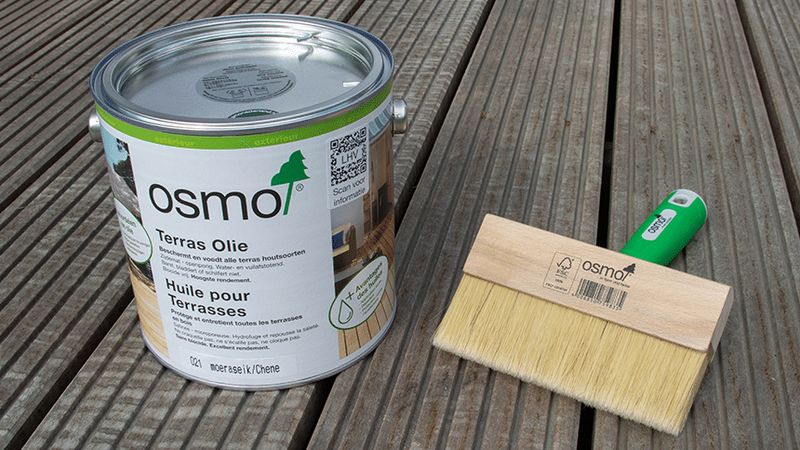
Apply the first coat of stain
- Stir or shake the stain well for even coverage.
- Use a brush or roller to apply a thin, even coat. Always work in the direction of the wood grain to prevent blotches.
- Let the stain dry (12 to 24 hours) and make sure the surface stays protected from moisture and rain during this period.
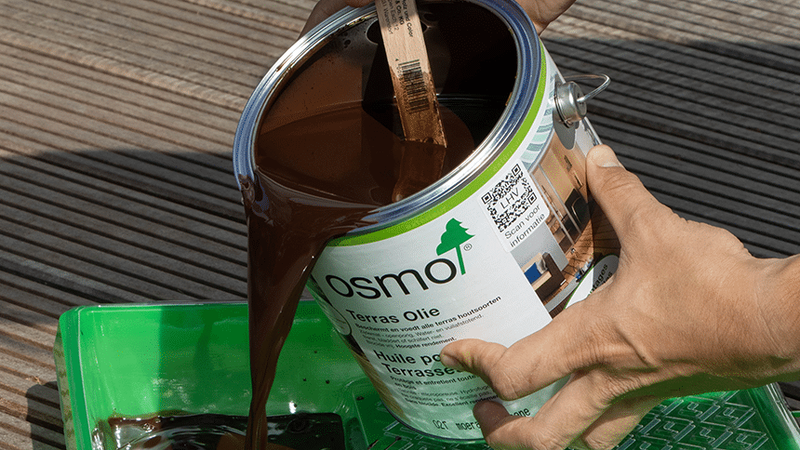
Apply a second coat
For long-lasting protection, apply a second coat. This extra coat provides better resistance to harsh weather and extends the lifespan of the Douglas fir.
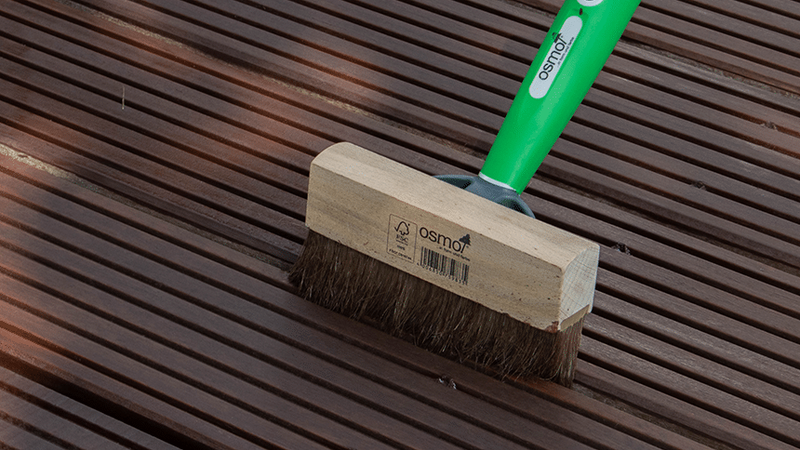
Let the stain cure completely
Avoid contact with water until the stain has fully cured. Check that the surface is even and remove any drips or blotches.
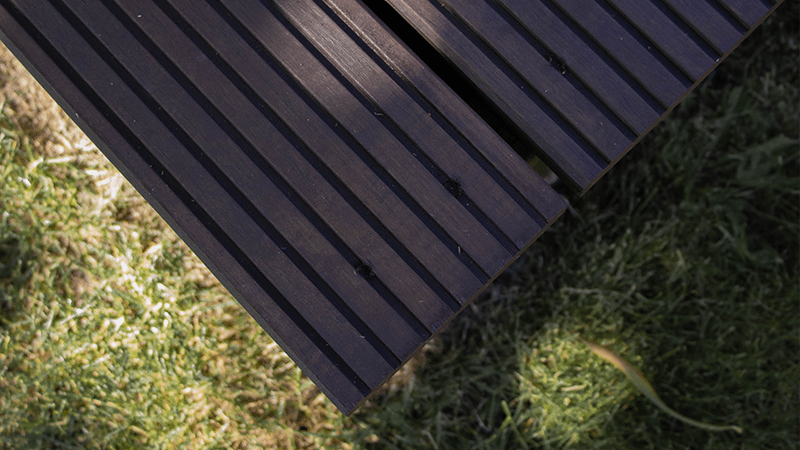
Benefits of Osmo Douglas fir stain
Using Osmo stain on Douglas fir offers specific benefits that ensure optimal protection and preserve the natural look of the wood:
- Protection against graying
Thanks to UV filters in the stain, fading caused by sunlight is prevented, so the wood stays beautiful for longer.
- Long-lasting protection
Osmo stain penetrates deep into the wood and forms a protective layer against moisture, dirt and the weather.
- Natural look
With a transparent Osmo stain, the wood grain remains visible and preserved, creating an authentic, natural look.
- No primer needed
Osmo stain adheres excellently to untreated wood, so a separate primer coat is unnecessary.
- Easy to maintain
Thanks to the high quality of Osmo stain, you do not need to sand again during maintenance, which saves time and effort.
Tips for a beautiful result
- Work in thin coats: this ensures even coverage and prevents streaks or blotches.
- Test the color first: use a test piece to see what the color looks like once dry.
- Suitable weather conditions: preferably stain on a dry day with temperatures between 10°C and 25°C.
Supplies
Colors and finishes
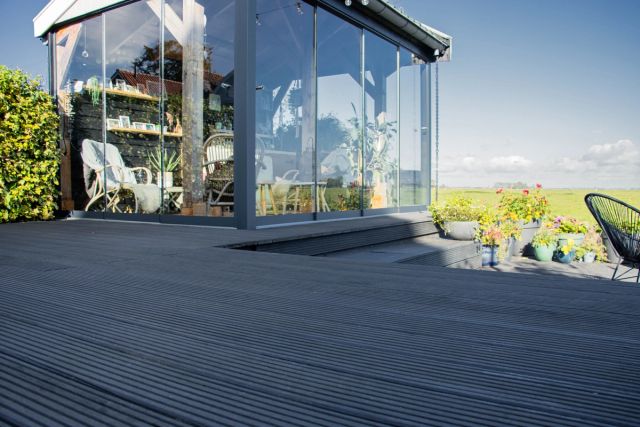
You can use Douglas fir stain in different colors. Transparent stain, also called transparent Douglas fir stain, emphasizes the natural color and grain, while opaque stain gives the wood a new look. Popular options are black stain and grey wash.
To stain Douglas fir black, you can use Osmo Landhuisverf, for example. This gives the look of an opaque paint while the wood grain remains visible.
UV-Beschermingsolie: for vertical wooden parts
Terras-Olie: for horizontal wooden parts
Osmo Natuurlijke Olie-Beits: popular colors
Maintenance advice
To protect your Douglas fir for a long time, follow this maintenance plan:
Cleaning: clean your wood at least twice a year.
Inspection: check every year whether the protective layer is still intact. If not, apply a new coat.
Prevent slipperiness: keep horizontal surfaces free of dirt and algae.
Frequently asked questions
This tutorial belongs to
What you need for this tutorial;
We're happy to help
Looking for DIY advice or have a technical question?