Removing mold from wood
Mold on wood is not only unsightly, but also harmful. Discover how to remove mold safely and prevent it from coming back.

What you need for this tutorial;
Mold on wood is a common problem that can affect both the appearance and the durability of the wood. Removing mold from wood is essential to prevent further damage and health risks. With the right approach and products, such as Osmo Terrasreiniger and Osmo Power-Gel, you can clean mold stains off wood effectively. Is mold dangerous? In this article, we discuss the different types of mold and how to tackle them.
What types of mold are there?
There are different types of mold that can affect wood, and mold can take different forms. Each type requires a specific approach to remove it from the wood effectively:
Black mold
You can recognize this type of mold by black spots and dark streaks. Black mold is the most common and also the most dangerous type of mold, often found in damp, poorly ventilated spaces such as basements or bathrooms. It is not only harmful to the wood, but can also cause health problems such as allergies and respiratory problems.
White mold
White mold appears as a powdery or fluffy white layer. White mold often occurs on wood that has been exposed to a damp environment with poor ventilation for a long time. Although white mold on wood seems less harmful, it can still affect the surface of the wood.
Green mold
Green mold usually develops on outdoor wooden surfaces, such as decks or wooden furniture. This type of growth on wood often occurs in damp and shady environments. It is also called green deposits or green algae.
Yellow mold
Yellow mold is rarer and is characterized by yellow spots on the wood. This type of mold often grows in very damp conditions and can be harmful when inhaled.
Wood rot
Wood rot is the result of long-term fungal growth and moisture. It causes structural damage, because the wood becomes brittle and loses its strength. Wood rot must be tackled immediately to prevent further damage.
Mold on varnish or paint
On treated wood, mold can grow on the varnish or paint layer. This often happens with insufficient maintenance or when moisture penetrates under the paint layer.
Step-by-step plan: removing mold from wood
Inspect the wooden surface
Determine which type of mold is present and how severe it is. This helps you choose the right cleaning method for removing the mold.

Use Osmo Terrasreiniger
For light or stubborn mold stains, we recommend cleaning with Osmo Terrasreiniger. Unfortunately, a mixture of warm water and vinegar, for example, will not be enough.

Clean the surface
- Use a stiff brush to remove the mold stains from the surface.
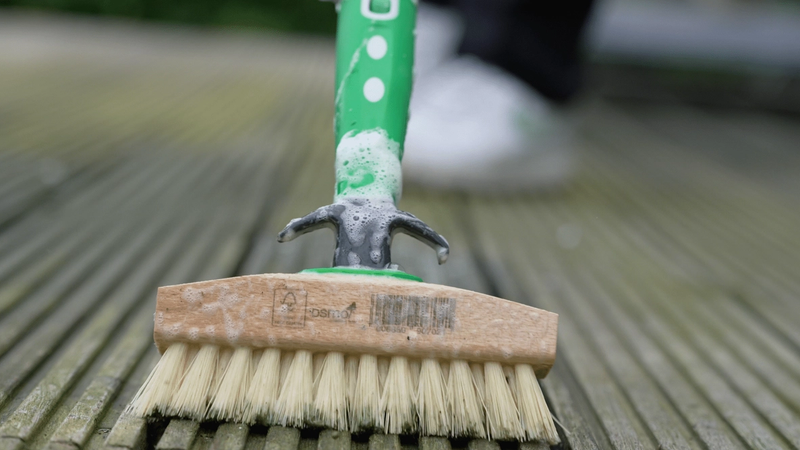
- For green deposits or light graying, apply Osmo Terrasreiniger. Let the product work for a few minutes and rinse thoroughly with a garden hose. Just wiping the surface with a damp cloth will not be enough.
Treatment for graying
Treat grayed wood with Osmo Power-Gel. Apply the gel with a brush, let it work for 20 minutes and scrub with a brush. Then rinse thoroughly.
Removing the graying brings back the original color of the wood. The cleaner removes the gray layer that has built up over the years due to UV radiation, for example on outdoor wooden window frames.

Let the wood dry
Let the wood dry completely. Damp spots can encourage new mold growth. After drying, check whether the mold has been removed completely. Dry wood is essential.

Protect the wood
Use Osmo UV-Beschermingsolie on vertical surfaces and Osmo Terras-Olie on horizontal surfaces. These products offer long-lasting protection against moisture and UV radiation.

Benefits of Osmo Terrasreiniger
Osmo Terrasreiniger is an effective solution for cleaning outdoor wood:
- Removes green deposits and dirt.
- Easy to apply and rinse off.
- Safe to use on various wood species.
Follow-up treatment after removing mold from wood
After removing mold, it is important to protect the wood:
Vertical surfaces: Use Osmo UV-Beschermingsolie for optimal protection.
Horizontal surfaces: Apply Osmo Terras-Olie for long-lasting protection against moisture and dirt.
Tips to prevent mold
- Sufficient ventilation: Ensure good air circulation indoors and around wooden surfaces to prevent mold.
- Let the wood dry: Let the wood dry thoroughly after exposure to water, for example after rain, so that mold does not get a chance to affect the wood.
- Check regularly: Inspect wooden surfaces for signs of mold and/or moisture.
All supplies for removing mold from wood
Apart from that, you will also need a bucket and a garden hose.
Colors and finishes
The colorless version of Osmo UV-Beschermingsolie (420) creates a wet-look effect and enhances the natural color of the wood, making it darker after treatment. When untreated wood is made wet, you can see what the colorless version will look like.
The colored versions create a natural tint on the wood. They are not opaque, but transparent with color, so the wood structure is preserved.
If you want to treat wooden garden furniture, we recommend taking a look at Osmo Natuurlijke Olie-Beits.
Osmo UV-Beschermingsolie contains a biocide that protects the coating against mold.
UV-Beschermingsolie: for vertical wood surfaces
Osmo Natuurlijke Olie-Beits: popular colors
Frequently asked questions
This tutorial belongs to
What you need for this tutorial;
We're happy to help
Looking for DIY advice or have a technical question?