Step-by-step plan for staining pine: handy tips
Staining pine protects the wood and adds color. Discover how to prepare and finish pine properly.

What you need for this tutorial;
Pine is a widely used softwood for furniture, floors and outdoor applications. To protect pine against moisture, strong sunlight and discoloration, it is important to stain it the right way. Stain protects the wood and keeps the grain visible, so the natural look is preserved.
In this article you will learn step by step how to treat pine and which Osmo products you can use for it.
Preparation
Good preparation ensures optimal adhesion of the stain and a longer lifespan for the wood. Depending on the condition of the wood, take the following steps:
1. Sand pine for an even surface
Pine has an open structure and often has light brown grain patterns and knots. For a smooth finish, it is important to sand the wood thoroughly first.
- Use coarser sandpaper (grit 40 or 80) to remove old layers of paint or dirt.
- Then switch to finer sandpaper (grit 120) for a nice finish and good adhesion of the stain.
2. Untreated or pressure-treated pine?
- Untreated pine: can be stained right away.
- Pressure-treated pine: sand the surface down to bare wood (grit 40, 80, 120). After that you can treat it with an Osmo product.
3. Cleaning dirty or grayed wood
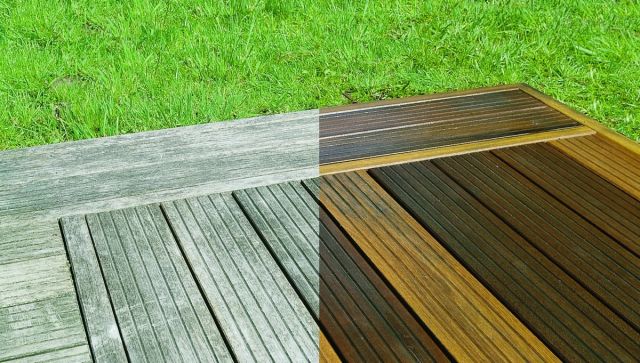
For grayed or dirty wood, use Osmo Power-Gel Houtontgrijzer to restore the original color.
Video: Staining pine
In this video you will see how to stain a table or furniture.

Tafel beitsen: hoe beits je een houten meubel?
Step-by-step plan for staining pine
Follow these 5 steps for a perfect finish.
Clean the surface
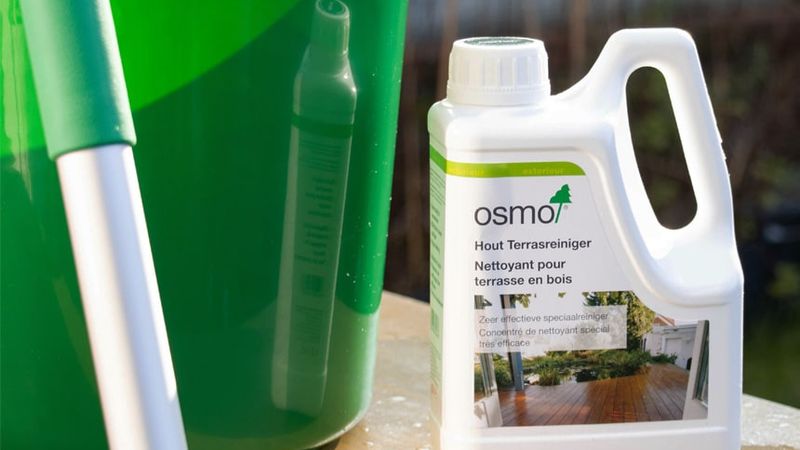
Remove dust and dirt with a dry or damp cloth. For deeper cleaning of exterior wood, you can use Osmo Terrasreiniger.
Choose the right stain for pine
Indoors (table, cabinet, floor), you can color pine with Osmo Olie-Beits or Hardwax-Olie Farbig. For pine outdoors, choose depending on the application:
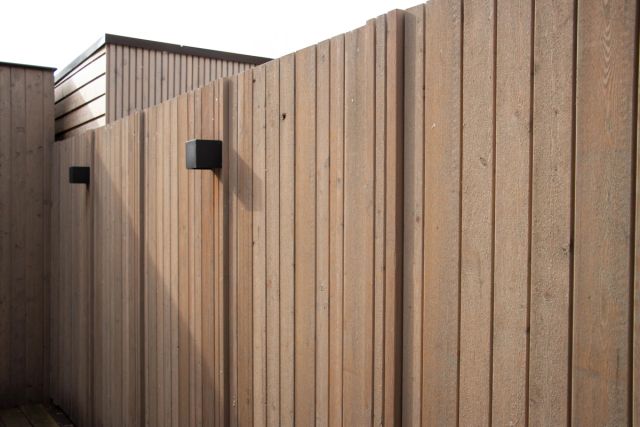
Osmo Natuurlijke Olie-Beits: gives a colored, natural look to exterior pine, such as fences, cladding, garden sheds and garden furniture.
Osmo UV-Beschermingsolie: slows down graying and is ideal for vertical surfaces such as cladding and doors.
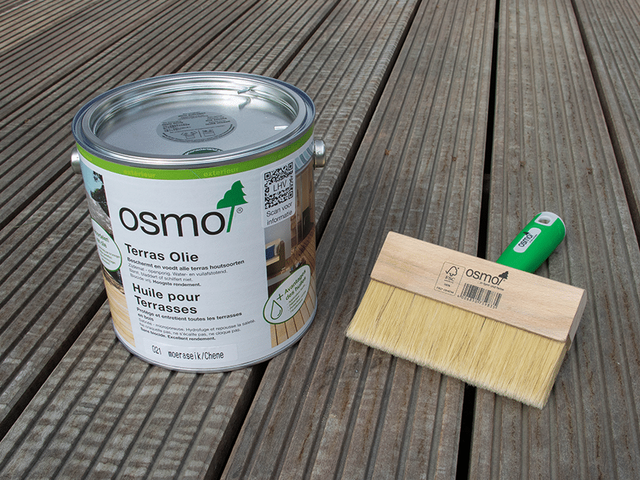
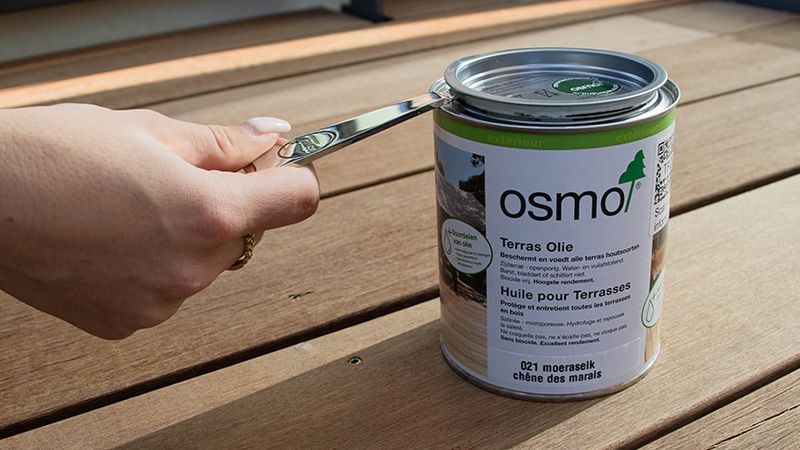
Osmo Terras-Olie: protects horizontal outdoor surfaces, such as decks and decking, against moisture and dirt.
Apply the first coat of stain
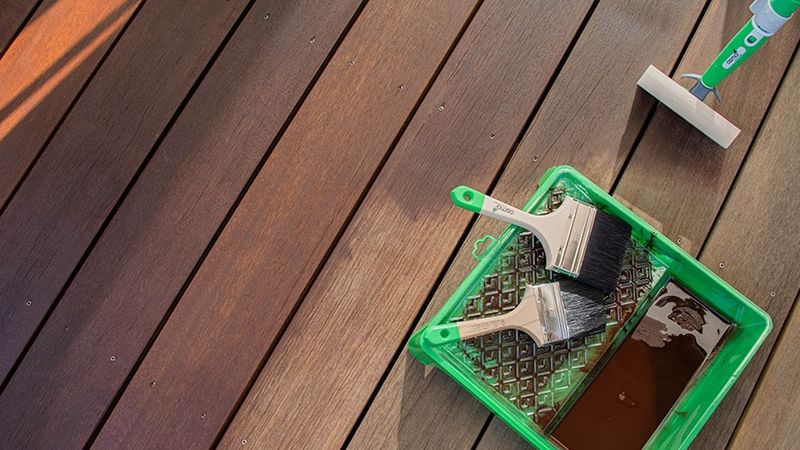
- Stir the stain well for even coverage.
- Use a brush or roller and apply a thin coat in the direction of the wood grain.
- Let the first coat dry for about 12 hours.
Apply a second coat
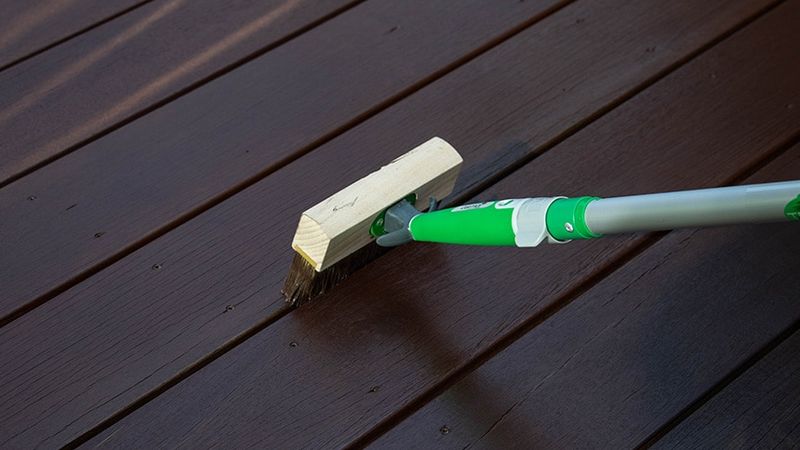
A second coat is needed for optimal protection. Apply it in the same way as the first coat and again let it dry for about 12 hours.
Let the stain cure completely
Avoid contact with water until the stain has fully cured.
Benefits of Osmo stain for pine
Staining pine with Osmo products offers several benefits:
- Protects against moisture, UV radiation and discoloration.
- Keeps the wood grain visible, for a natural look.
- Easy to maintain: a new coat can be applied without sanding.
- Durable and based on natural oils and waxes.
Supplies for staining pine
Tips for the best result
- Work in thin coats to prevent blotches.
- Stain in dry weather, between 10 °C and 25 °C (50 °F and 77 °F), for the best drying.
- Test a color on a small piece of wood first to make the right choice.
Colors and finishes
Pine can be stained in a variety of colors. Osmo offers, among others, a pine color that enhances the natural color of the wood.
- For a light finish, choose a transparent product such as Osmo UV-Beschermingsolie.
- For a richer, pigmented color, choose Osmo Natuurlijke Olie-Beits.
- For decks and decking, Osmo Terras-Olie is the best choice. If you want an opaque finish, Osmo Landhuisverf is a good option.
Osmo Natuurlijke Olie-Beits: popular colors
UV-Beschermingsolie: for vertical wood
Terras-Olie: for horizontal wood
Maintenance advice
- Clean pine garden furniture, decking and other exterior wood with Osmo Terrasreiniger.
- Clean decks twice a year to prevent algae from making them slippery.
- Check every year whether the wood needs a new coat.
Frequently asked questions about staining pine
This tutorial belongs to
What you need for this tutorial;
We're happy to help
Looking for DIY advice or have a technical question?