Treating a wooden garden bench
Many wooden garden benches turn gray, wear and lose their appeal due to weather and sun. Osmo recommends Osmo Natuurlijke Olie-Beits, Osmo Landhuisverf and Osmo Power-Gel to clean, protect and restore the bench.

What you need for this tutorial;
Like many people, do you have a lovely wooden garden bench in your front yard? But is it looking a little less beautiful every year? At Osmo Nederland, we have the solution: treat your garden bench with Osmo.
Garden bench wood species
Wooden garden benches come in all shapes and sizes. Many different wood species are used to make garden benches, such as spruce, bankirai, afrormosia and of course teak. All of these wood species are strong enough for garden benches, which is absolutely essential: the wood has to be able to carry enough weight.
Benefits of Natuurlijke Olie-Beits
- Primer and top coat in one
- UV-resistant, weather-resistant and water-repellent.
- High coverage: 1 liter treats 26 m²
- Based on natural ingredients
Video: Treating a wooden garden bench
In this video you will see how to stain garden furniture.

Tuinmeubel beitsen: hoe beits ik mijn houten tuinmeubelen?
Treating a wooden garden bench
Follow this step-by-step plan to protect your garden bench for a long time and keep the wood looking beautiful.
Choose the right finish
First decide what you want: a transparent stain or an opaque paint. For transparent protection, use Osmo Natuurlijke Olie-Beits. For an opaque color, you can choose Osmo Landhuisverf.
Clean and remove graying (recommended)
Is your garden bench dirty or gray? Then first clean it and remove the graying with Osmo Power-Gel. Apply the gel with a brush, let it work briefly and scrub with a stiff brush. Then rinse thoroughly with clean water and let the wood dry completely.
Sanding (optional)
Want to take the garden bench back to bare wood? Then sand in steps from 40 to 80 grit and finish with 120 grit. Only want to sand lightly for better adhesion? Then use 120 grit. Make the wood dust-free after sanding.

Apply Osmo Natuurlijke Olie-Beits
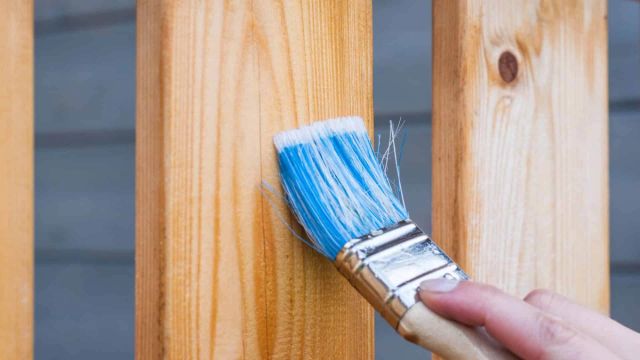
Apply a thin coat of Osmo Natuurlijke Olie-Beits with a brush or roller system. Work in the direction of the wood grain and spread the product evenly. Working in thin coats gives the best result and prevents stickiness.
Let it dry thoroughly and check the coverage
Let the treatment dry thoroughly. Then check whether you are happy with the color and coverage. Want more protection or a more intense color? Then you can apply an extra thin coat.

Test the color (optional)
Not sure about the color? Then use a test sample. Test it on the underside of the bench, for example. A test sample lets you try an area of about 20 by 20 centimeters.
Maintenance and touch-ups (optional)
The great thing about Osmo outdoor products is that they are easy to touch up and can often be applied over an existing coat. That way your garden bench stays beautiful for longer, without having to start all over again.
Supplies for treating a wooden garden bench
Staining a wooden garden bench
Looking for a high-quality stain for your garden bench? Then you can use Natuurlijke Olie-Beits. This Osmo stain is oil-based, unlike most stains, which are water-based. Because it is oil-based, this product lasts longer and will not crack or peel. In addition, the pigmented variants prevent the wood from turning gray, because they protect it against the sun's UV rays.
The convenient thing about Osmo outdoor products is that they can simply be applied over an existing treatment, so you do not need to sand the garden bench first. Just make sure the wood is clean and dry, and do a small test to check the adhesion.
Treating a wooden garden bench white
Want to give the wood a white color? You can. Osmo sells products that color the wood opaquely, as well as products that keep the wood structure and grain visible after treatment.
For an opaque effect, take a look at Osmo Landhuisverf RAL 9010. Most people know RAL 9010: it is a standard white, also known as pure white (Zuiverwit).
Treating a wooden garden bench black
Besides beautiful shades of white, you can also give your garden bench a black color. With Landhuisverf RAL 9005 Gitzwart, you paint the garden bench opaque black. This color fits perfectly in an industrial outdoor setting. You can of course also paint only the legs black and treat the rest of the bench with a colorless variant. With Osmo's many colors, the possibilities are endless.
Cleaning a wooden garden bench
Many garden benches have not been treated or cleaned for years. That is why it is important to clean the garden bench and remove the graying before you treat it. If you do not, the graying and dirt will stay trapped under the treatment, which gives a less attractive result. You can clean the bench and remove the graying with Osmo Power-Gel. Simply apply the gel to the garden bench with a brush, let it soak in briefly and then scrub the gel over the wood with a stiff brush. Once you have cleaned the whole bench, rinse the wood with clean water. When the wood is completely dry, you can treat it with the Osmo product of your choice.
This tutorial belongs to
What you need for this tutorial;
We're happy to help
Looking for DIY advice or have a technical question?