Treating a mango wood table: how to protect your mango dining table
Treating a mango wood table protects it against stains and wear. Discover how to keep the wood looking beautiful without losing its character.

What you need for this tutorial;
A mango wood table is a real eye-catcher in any home. The rich colors, robust look and striking grain make mango furniture extremely popular. But like other types of wood, mango wood is naturally sensitive to stains, moisture and discoloration. By treating your mango table with an oil specially suited for furniture, you prevent damage and enjoy a beautiful, natural finish for years.
In this article, you will read how to treat a mango table, which products are suitable, which look you can choose and how to maintain the wood properly.
Preparation: treating a mango table
Good preparation prevents problems while oiling and ensures an even end result.
1. Sanding (if necessary)
Has your mango wood previously been treated with varnish, stain or paint? Then sanding is necessary. Use sandpaper with grit 40, 80 and 120 to make the surface smooth and clean.
2. Oiled mango wood
Has the table already been treated with oil? Then do a test patch first. If the oil is absorbed well, you do not need to sand again.
3. Untreated mango wood
If the wood is still untreated, you can start oiling right away.
💡 Tip: order a sample of the oil first to check whether the color and look are what you want.
Video: Treating a mango wood table
In this video you will see how to oil a table.

Tafel oliën: hoe zet ik een tafel in de olie?
Step-by-step plan: treating mango wood
Osmo TopOil is ideal for treating small surfaces such as a mango wood dining table or side table. Follow this step-by-step plan for the best protection.
Choose the look you want
You can treat your mango wood table in two ways:
- Wet look: Use Osmo TopOil in a clear version. This gives a slight sheen and deepens the natural color of the wood.
- Adding color: Choose a tint such as Acacia, Terra or Grafiet and finish with a clear version here as well. This prevents color differences during future maintenance.

Apply the first coat of oil
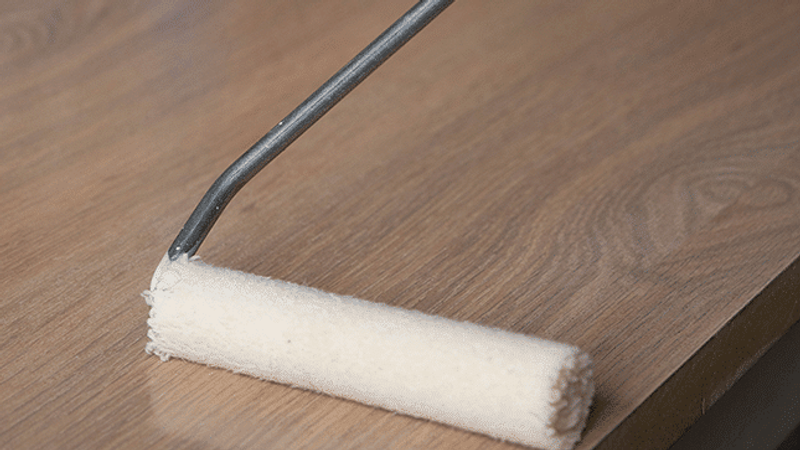
Use a microfiber roller for larger surfaces and a brush for edges or hard-to-reach areas. Apply a thin, even coat in the direction of the wood grain.

Let it dry
Let the oil dry for 8 to 10 hours at room temperature. Ventilate well and avoid contact with water while it dries.

Apply a second coat
Apply another thin coat using the same technique. After this second coat, the surface is water and dirt repellent and protected against scratches and rings.
Benefits of Osmo TopOil for mango wood furniture
Osmo TopOil is specially developed for furniture such as tables and countertops and offers many benefits:
- Food safe once dry, ideal for dining or kitchen tables
- Resistant to water, wine, beer and other liquids
- Penetrates deep into the wood and does not form a sealing film
- Keeps the wood grain visible for a natural look
- Provides extra protection against scratches and wear
- Easy to apply with a roller, brush or pad
Tips for the best result
- Clean the surface before oiling with a slightly damp cloth (not a wet cloth).
- After treatment, let the wood rest for 24 hours before using it again.
- Use coasters and avoid placing hot pans directly on the surface to keep your table beautiful for as long as possible.
Supplies
To treat a mango table, you will need the following:
Finally, you will also need sandpaper (grit 40/80/120).
Color examples
Osmo oil provides a protective layer without losing the wood structure. This way, you preserve the natural beauty of your mango wood table.
Mango wood maintenance: how to keep your table beautiful
With good maintenance, your table stays beautiful for longer and protected against the passage of time:
- Daily cleaning: use a dry cloth or Osmo Spray-Cleaner
- Light wear: treat with Osmo Vloeibare Onderhoudswas
- Need a new protective coat? First clean with Intensiefreiniger, then treat with Osmo Onderhoudsolie
Please note: do not use aggressive cleaning agents or scouring pads. A soft cloth or microfiber cloth is best.
Frequently asked questions
This tutorial belongs to
What you need for this tutorial;
We're happy to help
Looking for DIY advice or have a technical question?