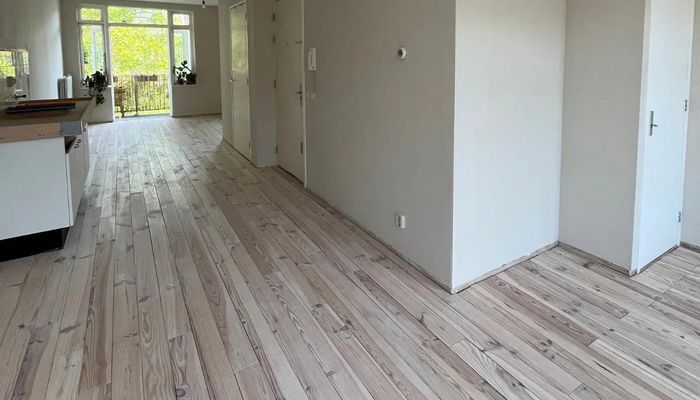
For pine indoors, use Osmo Hardwax-Olie or Osmo Olie-Beits. Pine is soft and porous: an oil soaks into the wood and makes the surface sturdier, whereas a thick layer of lacquer stays on top and can eventually crack or come loose.
Which oil for which pine surface
On a pine floor, use Hardwax-Olie Original, which makes the soft surface harder and more hard-wearing. For a pine table, cupboard or worktop, choose TopOil, which is resistant to spilled liquids and easy to touch up locally. Once dry, both are harmless to people, animals and plants.
Watch out for resin and uneven absorption
Pine contains resin channels that can start to bleed under a film-forming layer of lacquer. An oil finish prevents this, because the wood can keep breathing. In addition, pine absorbs colour unevenly because of the difference between softer and harder growth rings. So always test a colour first on a piece of leftover material or an inconspicuous spot. That way you can see in advance what the end result will be.
White wash or darker
Pine naturally yellows under the influence of light. If you want to keep the wood light or want a white wash, first apply Olie-Beits in white. For a warmer or darker shade, use Decorwas Transparant. Finish both with two coats of clear hardwax oil, otherwise the colour layer will wear too quickly.
Maintaining oiled pine
Clean an oiled pine floor with Wisch-Fix and refresh the surface over time with Vloeibare Onderhoudswas. If it concerns pine outdoors, such as a fence or garden furniture, see pine outdoors, as outdoors the wood needs protection against UV and moisture.